All posts by Mrs. Shannon Steimel

Half-Life / The W.I.S.H. Press interview with Bekah Steimel

Half-Life

by Bekah Steimel

I’ve had my fill of emptiness
and I’m starving for hunger
for an appetite of anything-but-this
this chemical buffet
all-you-can-eat elevation
that leaves me low and unsatisfied
My joy comes in doses
My joy has a half-life
As do I.

First appeared in W.I.S.H. Press 2016

In July 2016, Walking is Still Honest Press published this interview with Bekah to accompany her poem, “Half-Life.” The press has since closed.

Q~Can you tell us a little bit about yourself? At what age did you start writing? Have you always written poetry? Who/what first inspired you to start writing? Who are your favorite poets?

A~I’m 36 and last year I eloped in Las Vegas (thank you Supreme Court!!). I’m a poet and lover of all things animal, artistic and pharmaceutical. I’ve attempted poetry most of my life, and started sending out submissions five years ago. My Gramma always encouraged any creative endeavor. In her last letter before her death, she told me to keep writing poems. That’s all it took. My favorite poets are Adrienne Rich and Jim Morrison, for very different reasons.

Q~How do you first start writing a poem? Does it come to you out of the blue, or do you have a set time where you meet with your Muse each day and let the words just … come? Has your idea of what poetry is changed since you began writing poetry?

A~My poems just kind of reveal themselves to me. When they are ready to rise, so am I. I can go for a month or two without writing. Poetic camel, I guess. My idea of poetry is constantly evolving, which definitely keeps me motivated to change with it.

Q~Are you on Facebook or Twitter or any other social media? Does that fit into your writing life, and if so, how? 

A~I am on Facebook, Twitter and Instagram. The first thing I like about connecting with other poets is the ‘rejection camaraderie’ we share. I see that rock star poets I admire and respect get the same form emails and ‘best wishes’ I get, too. Secondly, it’s a good place to find submission opportunities.

Q~What words of encouragement can you offer other poets who are trying to get their work noticed?

A~My advice to any struggling poet is just to remember we are all struggling poets. That’s it.

At the Landing / an interview with poet Jessica Goodfellow

At the Landing

by Jessica Goodfellow

atthelanding

First published by FIVE:2:ONE Magazine 2018.

Janne1small

Jessica Goodfellow’s books are Whiteout, Mendeleev’s Mandala, and The Insomniac’s Weather Report. She was a writer-in-residence at Denali National Park and Preserve. Her work has appeared in Threepenny Review, Beloit Poetry Journal, The Awl, The Southern Review, Motionpoems, and Best New Poets, and is forthcoming in Best American Poetry 2018.

Jessica says of her style, “My educational background is in analytical fields, and I think that shows in my poems—they tend toward the abstract, festooned with logic games and scientific and mathematical vocabulary. I’d like very much to write something with less of an obvious anchor, with more trust in the unconscious tether to the conscious mind. I try to do that—I think it’s important to try to write outside of your comfort zone—but so far, I haven’t succeeded.”

Bekah and Jessica’s work—including the visual poem above—both recently appeared in #thesideshow at FIVE:2:ONE Magazine. We wanted to know more about Jessica and her poetry, so here is our interview with her.

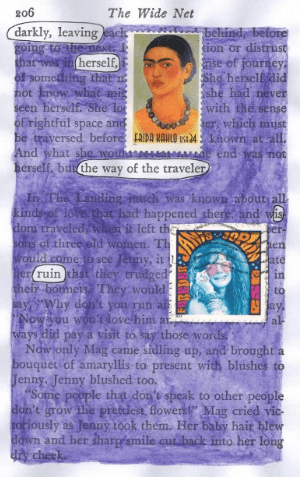
Q~ Tell us a little about “At the Landing.” What was the source material for this piece? What made you choose the stamps?

A~I call each erasure by the title of the short story it came from. I chose Eudora Welty’s short story collection, The Wide Net (Harcourt Brace, 1971), as my source material from the many books on my bookshelf because it has such an evocative vocabulary and also because there was a lot of space between the lines, making it easy to work with on a practical level. I have a box full of international stamps that I’ve been saving for some future project yet unconceived, and one of the erasures I worked on reminded me of a stamp I knew I had. After that I just tried putting them on different erasures, looking for stamps that were thematically relevant. I thought it was pretty unique, but I’ve since seen that Mary Ruefle has used this technique before.

Q~What appeals to you about erasure/visual poetry?

A~This is my first foray into erasure poetry. At the time I erased this piece, my mother-in-law was staying with us for end-of-life care, and I found that though I had vast swaths of free time while she slept, the need to be on-call at all times meant I couldn’t get into the writing space in my head. So, I decided to try erasure instead, and that worked really well for me, possibly because the act of erasing mimicked the experience I was having as I watched my mother-in-law dying, disappearing slowly.

Q~So sorry for your loss. Your new book, Whiteout, is also about loss. I am fascinated to hear more about the book and your experience as writer-in-residence at Denali National Park and Preserve. How did that come about?

A~My most recent book is about my uncle who was a mountain climber. He died on Denali in what was, at the time, the worst mountain-climbing accident in US history. I applied to be a writer-in-resident in the park in order to finish that book. I stayed in a one-room cabin out by the Toklat River, with only my sister. We were in the park (Denali National Park and Preserve) for 10 days. Being there gave me an understanding of why my uncle was compelled to do such a dangerous thing as climb Denali. Wandering around the vast park, feeling completely alone in the wild, going places we knew he had been, was profoundly moving. We were there 49 years and one week after he was lost—watching the sun wheel around the sky instead of set in the evening, I knew he had seen that, too. For the park I wrote a series of poems as an artistic donation. They say better than I am doing now what my experience was. Here is one:

The Wandered

My sister’s drawn to clean-edged kettle ponds,
learning how to tell which pools were formed in basins
left behind by glaciers, and which weren’t.

I’m captivated by erratics, empty-house-sized
boulders stranded in a strange land by ice
that melted out from underneath them.

Erratic comes from the Latin errare,
meaning to wander, to stray, to err. We are
not wrong, my sister and I, to feel kindred—

kin and dread—with what remains after
a mammoth force, no longer visible,
has carved out such a tattered landscape.

You can read the others here: https://www.nps.gov/dena/getinvolved/air-goodfellow.htm  Only “Nine Views of Denali” is in my book, because I wanted the park to have some original work not from the book. “The Wandered” is the one I most regret not putting in the book. Kettle ponds are formed by retreating glaciers carving out grooves in the landscape, and leaving meltwater. Erratics are giant boulders that were carried along by glaciers and deposited in a location where they seem out of place–they don’t match the surroundings because they didn’t come from there–many of them may have come from a mountain. Denali National Park and Preserve is dotted with both kettle ponds and glaciers.

Q~ Is there any online resource you would recommend for anyone thinking about a project book, like Whiteout?

A~The Cloudy House is a website of interviews with poets who’ve written project books, curated by poets Cynthia Marie Hoffman and Nick Lantz. If you are interested in project books, or want to know what one is; if you are curious about how having a project affects the writing process and later the marketing; if you wonder what kind of topics end up as project books, and whether a poet starts out with a project in mind or notices one is arising later—topics such as these—the interviews here are useful and fun to read.

Q~Your poetry has received a lot of acclaim. What’s one piece of advice you want to share? 

A~Your poetry should surprise you, but it won’t much of the time. That’s okay. Just keep sitting with it until it does. It takes a long, long time to write the words that are the right words. A short poem can take months. Don’t give up, and don’t get impatient and publish something before it is truly surprising to you. Read everything aloud—the part that you want to rush through is the part that you need to keep working on. 

Q~There are lots of publications out there. What is a literary gem you feel deserves more attention? Why will we love them?

 A~Forklift, Ohio: A Journal of Poetry, Cooking, & Light Industrial Safety is a quirky journal featuring smart, unusual poetry. Even the format of the journal is quirky (see their website for examples http://www.forkliftohio.com/ ), and with a print copy comes random pieces of ephemera, such as an envelope of seeds for planting or an old key fob from a hotel. Fresh writing, a little bit askew—there is nothing like it. This journal knows what it likes and doesn’t apologize for its slightly off-kilter aesthetic. From their guidelines (known as their logistics page) come these two pieces of info (plucked from among many others): 1) “[we] Fetishize the aesthetics of early industrialized society in a distinctly post-industrial fashion;” and 2) “[we] Include, besides poetry, such diversions as recipes, agricultural wisdom, home economics lessons, and other bits of nonsense.” How are you not going to love this journal? 

Q~Who are you reading now?

A~Right now, I’m rereading Natasha Sajé’s Vivarium. I love this book—it’s the right amount of cerebral for me. The poems are built around the alphabet and as with all good constraints, the alphabet fetishization inspires a certain meandering that is unexpected and mesmerizing. I’m also reading Viet Thanh Nguyen’s dark and disturbing novel, The Sympathizer, for my book club.

Q~Are you involved in your local poetry scene?

A~I live in Kobe, Japan, and there isn’t much of a poetry scene in English here (I don’t write poetry in Japanese). A couple of times a year there is a reading series event, but it’s any kind of writing in English, and more often than not it isn’t poetry. But, I attend and have been invited to read several times. I also belong to a group of poets around Japan writing in English who do a linked poem project. We each write a single stanza with given parameters and constraints, and pass it to the next poet who uses our stanza for inspiration, and that’s a lot of fun. It tends to be seasonal, in the Japanese tradition. There’s also the annual Japan Writers Conference that I attend about half the time. Mostly though, I’m on my own as a poet here.

Q~How has living abroad changed you as a writer?

A~I get asked this question often, and I have to say that I don’t particularly write about Japanese themes. Local imagery and the occasional Japanese word or phrase will show up in my poems, but I don’t specifically seek to dwell in the experience of living here—I leave that to other writers, while I tend to be interior in my work, and so only the part of Japan that penetrates my interior identity appears in my work. However, living here means a certain amount of isolation—from the poetry scene back home, from native speakers who comprehend my words without effort, from society at large here in this place where my foreignness is the most important aspect of me to nearly everyone I interact with—and that gives me more time and space to write than I imagine I would otherwise have. Also, my sense of being an outsider is heightened and continual, which I think is good for any kind of art even while it may not always be good for the private life of the individual artist.

Q~Where can readers go if they are interested in reading more of your work? 

A~I’ve linked to most of my online publications on my website. My erasures aren’t listed there, but here are journals where you can see more erasures: Star 82 Review, Thrush Poetry, Calamus, and decomP. On Facebook, I’m Jessica Goodfellow Ueno, and my Twitter handle is @jessdragonfly.

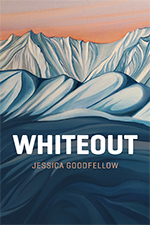
Whiteout Front Cover


origin story / An interview with poet Caseyrenée Lopez

origin story

by Caseyrenée Lopez

once upon a time
i wanted to die

be reborn a god

i stopped short,
killed myself

watched as i
became a christ

became my own
salvation

First published in the new gods (Bottlecap Press, 2018).

pic

Originally from Georgia, Caseyrenée Lopez relocated with their family to Virginia in the summer of 2017. They work as a professor of English at John Tyler Community College and have two full-length collections of poetry, the new gods (Bottlecap Press) and i was born dead (About Editions), as well as a chapbook, heretic bastard (Clare Songbirds Publishing House) forthcoming in 2018. In addition to teaching and writing, Caseyrenée also edits Crab Fat Magazine and publishes poetry and experimental work by queer and trans people at Damaged Goods Press.

Caseyrenée says their style of writing is “similar to Anne Sexton, Sylvia Plath, and other contemporary feminist writers.” They say, “One time I was compared to William Faulkner, and I still don’t know how I feel about that. I know my work is largely confessional in nature, but isn’t all writing confessional in some sense?”

Bekah and Caseyrenée first connected online when their work appeared together in the Yellow Chair Review 2015 Anthology. With Caseyrenée’s full-length collection, the new gods, being released this week, we thought this was a great time for an interview. So, here is our interview with them.

Q~How is “origin story” representative of your new collection?

A~“origin story” seems to me, the best representation, thematically, of the new gods. It provides a summary of the collection by illustrating the repetition of death, rebirth, shedding skin, or morphing into a new form or self and observing the changes—there is a lot of “watching” in this collection, and “origin story” also provides the eyes through which readers will encounter many of the poems.

Q~Do you find yourself returning often to these themes in your work?

A~I sometimes feel that I am writing the same poem over and over again. I write about queerness, orientation, non-binary gender, infertility, and trans love because these are the things that I know and experience. I’ve never written a persona poem because the thought of trying to inhabit someone outside of myself on such an intimate level turns me off—why would I write about things I haven’t experienced when there are so many people who have the lived experience to write about it? Imagery-wise, I find myself using birds, teeth, bones, and flora in my work repeatedly. I used to have dreams all the time where my teeth would crumble and fall out of my mouth, and it really freaked me out, or that I would break my arm or leg, and those images gave me a lot to work with, emotionally.

Q~Did the poem, “origin story,” come easily to you or was it hard to write?

A~Just as with 95% of this collection, this poem came every easy—in that it flowed out of me with little effort. the new gods is a project that sort of materialized over the course of three months or so; it’s something that I can’t believe I completed so quickly.

Q~What’s your writing process usually like?

A~It’s pretty chaotic—I don’t keep a writing schedule, and often go through long stretches of not writing for weeks or months, then it’s like I get random bursts of energy and creativity that allow me to write again. I also read a lot of different stuff when I’m not writing—it helps inspire and guide my formation as a writer.

Q~Who are you reading now?

A~Emily Corwin, Lisa Marie Basile, George Abraham, torrin a. greathouse, and Anne Carson immediately come to mind, but I’m always reading, so this is an exceptionally hard question to pin down.

Q~How do you balance spending time on your own writing career with your work as an editor/publisher?

A~Umm, it takes organization. I have to plan things out, sometimes months ahead, to meet deadlines and goals. Without my calendar and email, I’d be flailing big time. As a writer I never spread myself too thin with projects and the same applies to my editor side as well. I only commit to the work I know I can complete in the time frame I give myself. I also work as an English professor, so I have to make sure that I maintain a good balance of work life and home life.

Q~How has being an editor, publisher, and professor of English changed you as writer?

A~I’m able to see writing in all forms, in all stages, and all skill levels, and that is a lot to take in. However, these things have greatly informed the types of writing I love, like, and dislike. My editorial tastes aren’t a good match to my writing. In fact, I often think that the two sides are at odds with one another because they are so different.

Q~What are your poetry likes/dislikes?

A~I’m really turned off by double-spaced poetry and centered poetry—I just can’t get passed the form. But, I do love other experimental stuff. I think Crab Fat Magazine illustrates my tastes.

Q~Who was your poetry first love?

A~It’s a tie between Fatimah Asghar and Lisa Marie Basile. I love this poetry because it gave me the courage to write what I wanted to write and not what I thought I should be writing. Asghar and Basile’s work are unapologetic, and before discovering them I didn’t really have a strong grasp on what poetry could be or do. It was liberating to see myself in someone else’s words, to find peace in them–that’s why I think of their works as my first loves of poetry. It’s about visibility and making your space in the world, to know that other people share your ideas is an amazing feeling. It was also mind-blowing for me to know that these poets are living, writing today, and around my same age–I love being able to relate on that level, it’s like all poets are interconnected in some way, and in their writings I finally saw those connections in myself.

Q~What is the poet’s role in society?

A~To help people remember to be empathetic to others; we are always writing the hard stuff, people look to our words for inspiration, hope, love, to be seen. Poets help non-poets put language to the abstract of living—it’s an important, often underappreciated, role.

Q~There are lots of publications out there. What is a literary gem you feel deserves more attention? Why will we love them?

A~A few of my favorite journals are BOAAT, Thrush, and Adroitthey’re all publishing amazing work that pushes boundaries and constantly challenges my ideas of what makes a poem, what can a poem do, or how I look at and receive poems.

Q~What drew you to poetry?

A~Honestly, I tried my hand at writing fiction and that was a flop, then I tried nonfiction, and I’m actually not too bad at it, but my attention span and energy isn’t suited for the long form right now, so I turned to poetry. It’s my way of using techniques of fiction and nonfiction and blending them together with poetic techniques. I use poetry as a frame for my work, but really, I’ve always thought of my writing as lyrical and genre bending—for me, genre is really arbitrary and can be stifling, so I just write what feels good to me, sometimes that happens in stanzas, sometimes it’s prose fragments, and sometimes I can muster the energy to form complete sentences and work through an essay.

Q~What are your poetry highs/lows of the last year?

A~Last year BOTH of my full-length collections, the new gods and i was born dead, the “sister books,” that I wrote back-to-back were picked up for publication, and earlier this year, my second chapbook, heretic bastard, was picked up as well. On the low side of things, I’ve gotten more rejections over the last year than I’ve ever received, but I typically let it go pretty easily. The last year has been one of my most successful, creative, productive times of my life—it’s been wild.

Q~ Wow! Three poetry books coming out in one year. That sounds like quite a whirlwind! Can you tell us a little bit about each of these books?

A~My first two collections, the new gods and i was born dead, are sisters, they were written in the same year, and cover the same themes; however, i was born dead was written first and includes revised versions of some of the poems from my first chapbook, QueerSexWords. It often feels to me that these collections sort of wrote themselves because it was so easy to let the words just flow out of me. I read so often about the struggle to write and revise, and I’ve been there in the past, but I didn’t struggle at all with these poems. I think of them as a second coming-out, a revelation of my queerness and gender identity as a non-binary person.  the new gods came out on March 20th from Bottlecap Press, and i was born dead is out on October 12th from About Editions. My second chapbook, heretic bastard, is the product of a month long found poetry writing project, The Poeming, that takes place in October. In 2017 the project was based around the novels of Anne Rice, and I was assigned The Vampire Armand. It was a really fun project, and the poems that came from the text was both so alike and different from my completely original work. heretic bastard is forthcoming from Clare’s Songbirds Publishing House (date TBD).

Q~What’s one piece of advice you want to share?

A~I oftentimes feel like a total impostor, I mean can we name a writer that doesn’t, so when it comes to writing, I tell young/new writers to just get their ideas and thoughts down on paper. Don’t let the impostor syndrome scare you out of writing or submitting that work. When it comes to submitting and rejection you have to come to terms with the fact that rejection is a large part of this business, but that it’s never a personal thing. Learning how to accept rejection as a part of not only writing, but life, can get a person a long way. Really, when it comes to questions like this I tend to feel overwhelmed by all the “what-if’s?”, but truthfully, writing comes down to making a commitment to seeing your thoughts through to the end—it’s more so about holding yourself accountable and not letting the fear of the unknown deter you from raising your voice.

Q~Where can readers go if they are interested in reading more of your work?

A~My website is a good place to start, and it includes most, if not all, of my writing, both online and in print. It is also a good place to learn about where to find my books. I also Tweet @caseyreneelopez.  Here is the link to order the new gods.

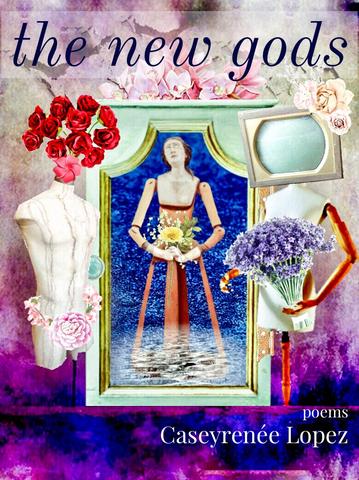
the_new_gods_front_cover_1_large


Audi Alteram Partem (Hear the Other Side) / An Interview with poet Amanda Rachelle Warren

Audi Alteram Partem (Hear the Other Side)

by Amanda Rachelle Warren

I shut my eyes; a dead man sings in my head.

And I can pick the tune, well enough to
know it is a hymn for banjos and fiddles,
but he is a capella. I can pick the tune,
but not the words.

Drunk at sixteen, you sung church songs
to them few saints we believed in:
Our Lady of Lost my Last Dollar,
St. Speeditup,
Dear Done-it-now,
and all the Demi-Gods of Beech and Blossom.

Lying back in the mown grass, gathering dew,
you: mouth sticky, pink drink sweet and sweeter.
Revelation and damnation all soft-serve swirled like the Dairy King.
Every note dead set, but half the words cold, dead wrong.

I trace, on the map,
the path that led/took us to us.
Wet grass to pound cake.
Tender to foreign.
Touch to Touch-me-nots.

I ask the dead man to speak up.
What he’s singing seems important
only because I can’t make it out.

Sometimes there is a choir.
Sometimes the quick bright chatter of many voices.
Sometimes, with startling clarity, a woman, loud in my ear, distinct,
telling me about the nemesis sun, armed pirouetting galaxies,
and the smell of carded wool before it is spun.

And then asking me, over and over,
Don’t you understand? Don’t you? Don’t you?
I do not understand.

I ask the dead to speak up.
I tell them in my real loud voice,
Ifin ya’want something, ya haveta says so I can hear.

The dead man sings me to sleep,
and there’s nothing to fear.

First published by Causeway Lit 2017. (Winner of Causeway Lit Spring 2017 Poetry Contest.)
arw

Amanda Rachelle Warren’s work has appeared in Appalachian Heritage, The Pinch, Roar, South 85, Anderbo, and Beloit Poetry Journal as well as other journals. Her chapbook, Ritual no.3: For the Exorcism of Ghosts, was published by Stepping Stone Press in 2011. She is the 2017 recipient of the Nickens Poetry Fellowship from the South Carolina Academy of Authors and currently works as a freelance writer, part-time teacher, and full-time poetry pusher.

Amanda’s work was brought to our attention by poet Allyson Whipple, whom we interviewed here. We offered Allyson the opportunity to “pay it forward” by choosing another poet to interview, and she chose Amanda. Allyson says, “Amanda Rachelle Warren is one of the people I think exemplifies a true poetry citizen. No matter how busy she is with teaching or her own (fantastic) writing, she’ll always make time to support other poets. I have such deep admiration for not only her art, but for her service to other writers.”

So, here is Allyson’s interview with Amanda.

Q~How would you describe your style?

A~I would say that my style is very voice driven and concerned with place and inheritance and identity. I think the self is something we all struggle with, and I had a particularly difficult time finding my place in the world. I always feel like a bundle of contradictions, and my poetry reflects the voices of those competing selves. Place, self, and voice are interconnected for me. I am an Appalachian who grew up part-time in the city. I am an English professor and word-nerd with a non-standard dialect which I was shamed for early on in my education. That leaves a mark, particularly for poets. I had to relearn my own voice in some ways, and that’s made me concerned with dialect, speech patterns, the lexicon of our individual voices, and the ability/inability of language to capture the ineffable contradictions of our experiences. That sounded hoity-toity. I like words. Words haunt me.

Q~Tell me a little about the poem “Audi Alteram Partem.” How is it representative of your work?

A~I jokingly say that 90% of my poems are about dead boys. Although that’s not entirely true, this poem “Audi Alteram Partem” which is Latin for “Hear the Other Side” is definitely about a dead boy. I think I write poems about the things that haunt me, and one of the things that haunts me most deeply is the loss of those other potential selves and their experiences…ones I did not have because my path led elsewhere. For me, part of that loss of potential selves is a reflection of the death of loved ones who helped form the self that carries on without them.

Q~Is there a backstory to the poem that you want to share?

The Latin title is a thing I’m doing. I have a lot of interconnected poems about Appalachia with Latin titles. The choice is inspired by my great uncle who died extremely young during WWII in an airplane crash in Brazil. He was this hillbilly kid who loved machines, and oddly knew Latin, which surprised me. He ended up in the Air Force where he traveled around the world. I have a box of his letters home, and they’re fascinating. He would write his younger brother in Latin so the censors during the war didn’t know what he was sharing. He was clever and charming, and he inspired me to learn Latin, too. At the very least I wanted to understand what he had written. Sadly, his younger brother also died in an airplane crash. Gravity does not love my family.

Another inspiration for this poem is not something I normally talk about directly except to family really, but there are many women in my family who hear voices. It’s not a frightening or a troublesome thing, but a fact. Are they real? Who knows. Is it psychic ability or mental illness? Probably both. Centuries ago they’d be saints or witches, right? The fact remains that we hear voices, and those who do hear them love them. They’re a comfort of sorts. So, when I wrote this I was thinking about my extended family and the voices (literal and not quite literal) of those family members we lose during our lifetimes. Those people live on in the stories we tell and those things we’ve learned or come to understand by growing up in a space shaped by their presence: place and voice and sorrow and joy and love and struggle going back generations.

I was also thinking about the border between what is acceptable and unacceptable, what is holy and profane, which is a topic I’m always interested in. I’m not a religious person, or really a spiritual one in any standard sense of the word spiritual. But, I am fascinated by what does and does not feel like “church” for lack of a better word, and the ecstasy of that feeling–those moments of overwhelming oneness and belonging, those little moments of awe, in the strictest sense with a little touch of terror, that we hold on to that become touchstones or emblems of joy. I was also thinking of how religion often offers joy in one hand while slapping us with the other and telling us “no.” That’s not fair. Life does it, too. I want the awe. Many people seem to become less aware of awe as they get older and more concerned with what’s acceptable. Well, some of us do. I seem to get less concerned with what others think as I get older, or I just never grew up. I don’t want to be so “grown” that I can’t lay in the yard and stare at the sky and feel awe.

Q~Did it come easily to you or was it hard to write?

A~This one was easy but it also developed slowly. It started with a bunch of notes, the title, and the italicized line in dialect. It sort of pieced itself together and then went through a few drafts. I remember being excited to write it, particularly the part about the map and my indecision about whether the line should be “the path that led us to us” or “the path that took us to us.” Both the active “led” and the passive “took” seemed genuine to the poem, so I decided to include both. The list that follows moves the speaker and audience from innocence and acceptance to something less secure, more distant, impersonal, fragmented.  I want to weep for the two boys in the poem and what they hold on to…like the comfort of their voices and memories.

Q~What’s your writing process usually like?

A~Scraps and lists. Lists everywhere. Notes. A bit of a line. A snippet of an image. Something I overheard. Something I saw. A list of names for cats I hate. A list trying to describe a smell. A list of attempts at spelling out birdcalls. A list of the interesting names on gravestones in the old corner of the cemetery on top of the hill between this town and the next. A list of astronomical terms. A list of meteorological terms a storm-chaser might use. A list of places where someone might experience a first kiss. A list of street signs or town names that make me imagine the people who live there.

Eventually these things will spark a poem. I live up the road from a street called Withering Heights. Withering. On that road are three mobile homes. One day as I drove by I noticed that near the second trailer there was a dog standing on the roof of a red pickup truck and howling. That’s a beautiful image…old joyous dog sounding his heroic AOOUUU on top of a truck on Withering Heights!  That’s going in a poem eventually. And, that poem will go through a lot of weird little revisions and a few major ones. Hopefully, it will turn into something, but if not…that’s a learning experience for me. It might take decades to write that poem, or it might take a half day. I don’t know. I’ll keep working at it.

Q~Why do you write poetry?

A~I’m not really sure. I love words. I love language. I love the power it has to create ideas. I started out writing stories and reading nursery rhymes. I learned to read by writing actually. It was some 1970s method of teaching children to read and my Aunt wanted to try it out so I was her guinea pig. My first story was a poem/story about my new swing set. It was written in a “book” of kindergarten lined paper bound in wallpaper scraps. My mom still has it. I love writing prose, too, but poetry is my main focus. Ideas and images and lines and voices get stuck in my head, and it’s how they get out. It started out pretty cathartic, and I guess it still is, but it became more than that once I started reading the work of other poets. I was the 15 year old with three books of contemporary poetry in her bag, I guess.

When I started attending poetry workshops and learning more about what could be done with language I was hooked, but it still wasn’t a thing I thought about as more than a hobby…it was just a thing I did. I wrote poems. I got serious when I applied for my MA in creative writing at Ohio University, but I still didn’t know what I was doing or what I was getting into. I will admit that the reason I didn’t apply for an MFA is that I didn’t know that was an option. I had no clue about college and definitely no clue about graduate school. If I hadn’t gotten in I still would have written poetry, but I have no idea what I’d be doing with my life or where. Sometimes I like to think about that other self.

Q~Do you find yourself returning to certain themes or subjects in your work? Why do they resonate with you?

A~I return to place. I write about rivers and mountains and light and fractured people who are haunted by things. I write a lot about roads as well. I love roads. I love driving. I love seeing what’s out there. And, I’m super social, which is not very “poety” of me. I love talking to people and learning about their lives…what makes us human and tragic and bizarre and lovely. Also like I said, 90% of my poems are about dead boys. Again, I my poems return to those things that haunt me. I think that’s true of most writers though.

Q~Who was your poetry first love?

A~My first love was Homer. We had an old, dusty collection of bound books, which now live on my shelves. I read The Illiad and The Odyssey. It’s all action and adventure which I loved at age 10, but it was the quiet moments that got to me. The wine dark seas. The hair curling like hyacinths. The pleas with the gods. The descriptions. Then I found other poets. Yeats, Tennyson, Rilke, then e.e. cummings for some reason, and he exploded my expectations of poetry.  I’d borrow poetry anthologies from the library and I ate up all the modernists and the Romantics and sonnets and psalms. I devoured them. Still, I hadn’t heard a voice like mine though. I had that odd expectation that we sometimes get as novice poets that poetry is this grand formal thing that belongs to  only certain kinds of poets, and certain kinds of people. I felt like it didn’t really belong to people like me because I hadn’t read poets like me yet. It took me a while to find the voices and poets connected more intimately to my experience. So, when I found Lucille Clifton, C.D. Wright, and Maggie Anderson and I read their work, I felt like the world had exploded. It was awe.

Q~Who are you reading now?

A~Currently on my desk: Lucille Clifton’s good woman, Terrance Hayes’s How to be Drawn, Martin Rock’s Residuum, Eugene Savitzkaya’s Rules of Solitude, and Donika Kelley’s Bestiary.

Q~What are your poetry highs/lows of the last year?

A~I’ve had a lot of publications in the last year due to some major “carpet bombing” of literary journals. It’s been great actually. The high point is that I had a manuscript accepted for publication through Urban Farmhouse Press for their Crossroads Poetry Series.

Q~What’s one piece of advice you want to share?

A~Take risks with your work. I mean that in several ways. The first way I think we should take risks is when writing. We should be unafraid to go to uncomfortable or difficult places in our writing. We should be brave about complicated things, expose hard truths, risk discomfort, and be honest about what we want to share with others.  Remember, poets can always claim poetic license if someone should question us…so don’t hold back. Those poems we take risks with sometimes turn into our best pieces. The second risk we should be willing to take is in sending our work out for publication. I know many very good poets who are afraid to share their work or submit it for publication. I am not sure if it is a fear of exposure, rejection, or something else, but I always think “what’s the worst that could happen?” I mean, if you send your work out and it is rejected, that’s not a big deal. And, if it’s published? Well, that’s awesome! Rejection of a piece of writing isn’t a condemnation of the work or a writer’s ability. Keep writing. Keep sending. Keep sharing. It’s okay.

Q~Where can readers go if they are interested in reading more of your work)?

A~I have no idea. My work is scattered all over the place. I should probably have a website. Just Google me, but be sure to include the middle name or you’ll get the myriad other Amanda Warrens. I can also be found on Google Plus.

Q~Is there anything else you’d like me to know?

A~Not all of my poems are about dead boys.
blue_house_photAllyson Whipple is a poet, amateur naturalist, and perpetual student living in Austin, Texas. She is the author of two chapbooks, most recently, Come Into the World Like That (Five Oaks Press, 2016). Allyson teaches business and technical communication at Austin Community College, and enjoys hiking and camping.

A Glimpse Inside / An interview with poet Judy Shepps Battle

A Glimpse Inside

by Judy Shepps Battle

Inner voice

muted by biography
distorted by decades
defying extinction

alive for nanoseconds
moments of magic
lucid awareness

reveals pristine prison
equipped with
Jacuzzi and bidet

cell carpeted
door unlocked
length of stay

optional.

First published in Fourth & Sycamore 2018.

Judy Shepps Battle has been writing essays and poems long before retiring from being a psychotherapist and sociology professor. She is a New Jersey resident, addictions specialist, consultant and freelance writer. She is also just one more human trudging the path of human incarnation; one who loves to write.

Judy says her style is “to meditate deeply and then allow my pen to act as a conduit for what my heart is feeling/saying.” She says, “I have never been a ‘technical’ poet and my biggest lesson I had to learn was to be willing edit. To be willing to remove my clutching of each written word as something I had to keep. There has been incredible freedom to release that faux ownership.”

Bekah and Judy were recently published together in Fourth & Sycamore—including the above poem—as well as The Ramingo’s Porch’s “Love, Spring & Revolution” issue and Free Lit Magazine’s “Bildungsroman” issue. We wanted to know more about Judy and her poetry, so here is our interview with her.

Q~Tell us about “A Glimpse inside.” How is it representative of your work?

A~It is part of the theme of active introspection that has infused all of my writing since age 10 (nearly 65 years ago). For more than a decade, I wrote poems with both my dominant and non-dominant hands. It was the voice of “Li’l Jude” (the youngest part of me that experienced early incest and other abuse) and “Teen Jude” (my inner rebel who was angry and scared but somehow had words to describe what she was feeling) that emerged from the non-dominant hand writing.

Q~Your background in psychotherapy seems to inform your writing. Can you tell us a little more about this?

A~My earliest childhood memories begin around age three and include incest, emotional abuse, and being the child of addicted/mentally ill parents. I studied psychoanalysis and became a therapist in an effort to understand these factors and their effect on me. In the process, I heard so many stories similar to mine from resilient adults who used their experiences in a positive way. And, from kids of all ages. My first poetry chapbook (currently looking for a publisher) is “Permission To Tell Secrets” and is entirely the “voice” of Li’l Jude. The second chapbook (also looking for a publisher) is “Telling Secrets Without Permission” and is the angry and wise voice of Teen Jude.

Q~What’s one piece of advice you want to share?

A~Just write and just submit. Value each rejection as evidence that you are true to your calling and sharing your being (whether met with rejection or not). For me, dealing with rejection was the hardest, especially when it was of material written with my non-dominant hand. The muse guiding Li’l Jude and Teen Jude is very fragile and needs support from my adult self and its awareness that there is no shame or injury received in getting a rejection from an editor.

Q~Why poetry? 

Why not poetry? I also write articles on family dynamics and troubled teens and have written a short book (needing a publisher) on “Almost Forever: When Your Teen Wants to Die.” I write meditations which are really poetry in motion and had a newspaper column in the local paper for three years. It was called “Kids and Community” and published weekly with the goal of both increasing a sense of community and educating families about the world kids lived in, the stresses and the joys. In the process, I also did a lot of educating on the variety of drugs kids were exposed to and what is “normal” for teens (and not just oppositional). The column ran a couple of years and followed a similar column I wrote called “It Takes a Village” with the same theme.

Q~What is the poet’s role in society?

A~To keep alive the positive energy of communal connection that is so sorely threatened by politics, technology, and environment.

Q~You deferred publishing for many years to focus on career and family. What has it been like to be free to pursue your passion again in retirement?

A~Blissful. Organic wholeness has returned. I don’t multitask well, so to finally be able to focus on publishing the thousands of poems I have written as well as essays and a book is freedom incarnate. I never have not written. It is just part of me. Not to say that there haven’t been periods of me walking away from my muse to something more attractive, but these brief intervals usually dissolve naturally.

Q~What’s your writing process like?

A~Get up in the morning. Meditate. Write. Send out submissions. Then play with my one-year-old black labradoodle who has to patiently wait for this process to complete.

Q~Who was your poetry first love?

A~Paul Goodman. Paul was a model for growing up in the 60s. He was a radical, intellectual, adamant support of the New Left and an amazing guy. I met him when I was taken to a reading of one of his books (Growing Up Absurd) by one of my professors at State University of New York at Oyster Bay (now Stony Brook University). I’m told I just sat through his reading which was at his apartment in New York City with my jaw wide open. The room was filled with New York intellectuals, and I was a college junior. I was surprised that he wrote/published a lot of wonderful poetry and felt his energy was much like mine. We became friends, and he was a wonderful mentor.

Q~What are you reading now?

A~Buddhist magazines.

Q~Where can readers go if they are interested in reading more of your work?

A~Just Google “Judy Shepps Battle” and tons of pages with my work will appear.

Escape / An interview with poet Veronica Hosking

Escape

by Veronica Hosking

Escape within
living with cerebral palsy
Escape within
writing poetry I begin
to lose constraints my mind is free
words give me possibility
Escape within

Poem first appeared in Bare It All Expo at 9 the Gallery 2016.

14462837_1424559687557409_8780963575393812659_nVeronica Hosking is a wife, mother and poet. She lives in the desert southwest with her husband and two daughters. She was the poetry editor for MaMaZina magazine 2006-2011. “Spikier Spongier” appeared in Stone Crowns magazine November 2013. “Desperate Poet” was posted on the Narrator International website and reprinted in Poetry Nook February 2014. Silver Birch Press published several of her poems.
When asked to describe her style, Veronica says, “In 3rd grade I read Dear Mr. Henshaw by Beverly Cleary, and she said, write what you know; many of my poems are autobiographical. Quite a few years ago I became a member of gather.com (which no longer exists), and the people I connected with on the site gave me a lot of great feedback on my poetry. I think it is the place I became comfortable calling myself a poet.”

Bekah and Veronica connected this year via the 2018 Poet Bloggers Revival Tour and realized they had also been published together in the Silver Birch Press “My Mane Memories” series back in March 2016. We wanted to know more about Veronica and her poetry, so here is our interview with her.

Q~Tell us a little about your poem, “Escape.” Is there a backstory you want to share?

A~“Escape” is a poem I wanted to share because it is autobiographical. I was born with cerebral palsy and have escaped within my writing from a young age — I also use reading as an escape. You know the old adage, you can’t write if you don’t read. “Escape” appeared in an art exhibition in Phoenix, AZ Bare It All (pictured above).  It was an expo where women talked about self-love, learning to love our bodies flaws and all. Then in 2017 the rondelet was made into a 5 line poem and published in the anthology, The Colour of Poetry.  This poem was not an easy one to write, because it was the first one I wrote focusing on my CP.

Q~Why do you write poetry?

A~The big reason is it’s short. The cerebral palsy affects my right side; I type everything out with only one hand. I love writing. I began writing short stories because I knew I’d never be a novelist, and I didn’t have confidence in my poetry, nor did I think poetry would be lucrative. But, once I met some writers online and started getting some great constructive criticism, I grew more confident in my poetry. I participated in my first NaPoWriMo (National Poetry Writing Month in April) in 2010.

Q~You seem to enjoy writing challenges and prompts. Why is that?

A~I do enjoy writing for challenges just to see if I can. Remember a challenge is just to get words on paper. You can always go back and edit and polish later. Not everything one writes for a challenge/prompt is gold, but it’s a great way to get your creativity flowing. Speaking of NaPoWriMo check out poets.org you can request your own poster for the month.

Q~What are your poetry highs/lows of the last year?

A~At the start of 2017, I had a poem published on Silver Birch Press – “Me at 17” series. Later on, Melanie (the editor) announced she was going on hiatus, and then she closed the website indefinitely. In April, I completed another NaPoWriMo; however, most of 2017 my poetry muse was quiet. At the beginning of 2018, I was excited to read that poets have decided to work on sharing their writing process and poetry in the 2018 Poet Blog Revival. This February, I learned the month has been dedicated to writing haiku – shortest month, short poetry form. I’ve been writing at least one haiku a day on Twitter with the @baffled #haikuchallenge word. 

Q~Will you share a favorite haiku or two you’ve written for February’s challenge?

A~Here are some favorite haiku from NaHaiWriMo

I see my breath fog
brisk February morning
Canada geese honk

Despite growing up in Buffalo, NY, I’ve acclimated to desert weather, and when it only gets into 60s for a high, I’m cold. Also, Buffalo is very close to Canada and has many Canada Geese. I love hearing their honk when they migrate in the spring and fall.

Sunday has arrived
do laundry over again
cycle never ends

I like this one because it depicts my life as a mom and the never-ending work.

Q~Are you involved in your local poetry scene? What’s it like?

A~As for the Phoenix poetry scene, I’d say I’m passively involved. I’ve attended several poetry readings, but I have not gotten in front of the poets to read my own work. I’m more than happy to cheer on the speakers while sitting in the audience. The poetry scene in Phoenix is active. I follow the Phoenix poetry events page on Facebook. They post several readings a month. It’s easier for me to participate on the Internet because it doesn’t involve transportation issues. Right now, I’d say I’m involved in the Poet Blog Revival online. What I enjoy most about the Poet Blog Revival really isn’t being a part of it myself, though it does give my muse something to aim for once a week. My creativity was somewhat lacking last year. What I really enjoy is the insight into the lives of fellow poets and seeing I’m not alone in this struggle to express myself in words.

Q~Is there an online resource you would like to recommend?

A~My go to place to submit poetry is Submittable They recently opened a discover page where you can peruse submission calls by genre, deadlines and probably even specific magazine/publisher names. I signed up for it because I submitted a few pieces to markets that used the website, but I love the new discover feature and have used it a few times already to submit to new places.

Q~Where can readers go if they are interested in reading more of your work?

A~My Twitter id is @HoskingPoet, and you can follow my poetry and life babbling on my blog.

The Order of Things / An interview with poet Soledad Caballero

The Order of Things

by M. Soledad Caballero

As with all things now, I want order.
I want to take the strings of chaos, the
lonely stamp, the left over paper,
the bruised, too ripe peach, the thick
flyaway grey hairs and stack them.
Stack them in a row. Put them in a box.
Label each part, taking time to make
sure I noted the skin of the peach, the
wire tangle of the hair, the missing
colors on the faded stamp. I want
to make them whole again, full and
not dead or dying. Order is a place
of rest and stopping. Long ago I said
I wanted to be light, the way silk feels
light against the heat of the sun.
I imagined floating in this world, always
sure of how beautiful the mess would be.

But I have learned cells can grow to wild
proportions. Along the inside pulsing parts
of the body, carving their path with serrated
blades along muscle tissue, the pink inside
of the breast. Under the arm, reaching for
the small, jellyfish glands. This was more
than a mess. Those cells, an aching
mouth of angst and blood, urgent for
the rest of it, the rest of me. And I alone
in this jungle of living, a stumbling
wanderer. This is not the story I wanted.

First published in Memoryhouse Magazine 2018.

Self-picture

M. Soledad Caballero is associate professor of English at Allegheny College. She is a 2017 CantoMundo fellow, has been nominated for a Pushcart Prize, a New Poet’s Prize, and has been a finalist for The Missouri Review’s Jeffry E. Smith poetry prize and  Mississippi Review’s annual editor’s prize. Her work has appeared in the Missouri Review, the Mississippi Review,  Iron Horse Literary Review, Memorius,  Crab Orchard Review, Anomaly, and other venues.

Soledad says she is drawn to narrative verse. She says, “I think my style tends, generally, to reflect this. I think my style can be over the top and I get really caught up in images that are ‘big,’ for lack of a better term. I like big sweeping poems, poems that make me gasp out loud after I’ve read through them, epic in their emotional qualities, and I am drawn to that in my writing. But, more recently, I have also been trying to be more muted and understated, more contained in my form. There is power to that kind of slow-burning in poems, too.”

Soledad and Bekah’s work—including the above poem—recently appeared together in Memoryhouse Magazine’s “Wander” issue. We wanted to know more about Soledad and her writing, so here is our interview with her.

Q~Tell us a little about the poem, “The Order of Things.” How is it representative of your work?

A~“The Orders of Things” is representative of a move in my work to be more structured in form and in images. I am trying to be less unruly in some ways, so I can tap into unruliness in others, if that makes sense. I wanted this poem to be muted since it was such a big thing I was writing about, cancer, my cancer and what it has meant to think through being sick.

Q~Did it come easily to you or was it hard to write?

A~This poem felt like it came very easily, but that is only because I was sick for a long time, and I was in some ways writing it even while I was sick.  In terms of drafting, I had the form in my head, and I had the first line.  Usually, if I have the first line of a poem or the sound of the first line, its music, I’m ready to start drafting.

Q~What’s your writing process usually like?

A~I wish I could say I have this very disciplined writing process for poetry, but I don’t! For my scholarly essays I am very disciplined: research, drafting, more research, more reading and drafting. I get the sense of an arc there.

For poetry writing, I guess it’s more seasonal, but there’s no way to say what the seasons really are. I get an inkling, like a gut feeling, and that often starts the process. I just read a news article about the possible extinction of the North Atlantic Whale, that captured something for me. I do not usually write about nature in a traditional sense, but the ocean is something that really grabs me, so I started thinking about images for this poem. I like being in the world a lot and then seeing what feels like it sparks something. Another way I have done sustained writing is taking workshops. That kind of writing really forces me out of my usual subjects and forms. I’m taking a workshop right now, and it’s been very good for me, just to practice using different poetry muscles.

Q~Why are you drawn to poetry?

A~I learned English as a girl, and I actually hated all the strange rules of it. English seemed like very alien, and I think writing poetry was, when I was a girl, a way to get closer to it. Now, it seems to be the best way to capture the strange extraordinariness of living. I think reading poetry for me is like taking in something so rich and beautiful, as if I didn’t even realize how thirsty I was until I read poetry.

Q~Who was your poetry first love?

A~When I turned fifteen years, my mother gave me Pablo Neruda’s Veinte Poemas y una Canción Desesperada and said, “Estas lista para esto, hija.” It was her copy, a bilingual edition. But, even before that, when I was a very little girl, four or five, my mother had me memorize long poems in Spanish. I think that’s something that kids used to do in Chile once upon a time. She did it as a girl, and so she wanted me to do it. I still have memories of reciting those poems after dinner and at dinner parties when I was very young in Chile. I don’t remember the poems now but I remember the cadences of reciting long, beautiful words. That is how I fell in love with poetry I think, Neruda and Mistral just cemented my life long affair!

Q~Who are you reading now?

A~I am just finishing Nikky Finney. I also just finished Empire by Xochiquetzal Candelaria. On my list is the rest of Beast Meridian by Vanessa Angélica Villarreal, Scar on/Scar Off by Jennifer McCauley, and Javier Zamora’s Unaccompanied. I’m reading my CantoMundo gente as much as I can.

Q~What is the poet’s role in society?

A~By training I’m a British Romanticist, so I am sucker for Percy Bysshe Shelley’s idea that poets are the unacknowledged legislators of the world and of William Wordsworth’s idea that a poet is like all other people but also more attentive to things. I think we are living in an era of amazing poetry and poets. The list I mentioned above is just a small taste of that reality. I think we are seeing that poets and poetry are able to make connections across time and communities in unique, complicated, beautiful ways. Poetry is compact and packs a lot in it. That matters right now. I think Jimmy Santiago Baca said that poetry saved his life. Lots of poets and writers think of poetry that way. I know that sometimes people are scared of poetry or think they don’t “get it,” like poetry is an elite thing only for some people. I know why there is that feeling. After all the history of education in our country is hardly conducive to anyone thinking there’s equity and justice there. But, I wish for poetry to be everywhere, for everyone, just like movies or pop culture might be. I think we need it because it’s a striking mirror that shows us who we are, what we want and aspire to, and how we might be there as communities.

Q~What’s one piece of advice you want to share?

A~Honestly, rejection is simply awful. I think we undervalue that pain a little bit. Or, we make jokes about it. Or, we individualize or internalize it so it’s secret and silently shameful.  I think we need to be honest and open about that pain. For me, poetry is some of the most personal writing I do. Getting rejections, and I get a lot of them, is hard. It takes emotional effort to shake it off and keep writing. I think we need to be okay with feeling that pain, the pain of rejection. I think that honoring that pain more and being receptive to its truth may make it easier to pick yourself up the next day or next week and keep writing.

I write because I can’t not write, but that doesn’t mean it’s not painful. In some ways, it’s only more painful not to write than to write, and that pain isn’t only about that internal critic we all have. Rejections of our writing hurt. I really find it frustrating that there’s sometimes a denial of that pain. My advice is not to smother or deny that it hurts a lot to get rejections, and it make take you a minute to get back to your work or the page. That’s okay. I had to stop working on my manuscript for a while, several months, because it’s gotten a lot of rejections. I still haven’t sent it out again. Have compassion for yourself and for those folks in your communities who are getting all those rejections, too.

Q~Where can readers go if they are interested in reading more of your work?

A~Here are links to some of my poems in The Missouri Review, Memorius, Origins Journal and Memoryhouse.

When Trying to Return Home / an interview with poet Jennifer Maritza McCauley

When Trying to Return Home

by Jennifer Maritza McCauley

In the morning, I leave a panaderia on SW 137th
and a Miami browngirl sees my face
and says de dónde eres Miami or Not?
And I say Not, because I live in this blue city now
but she means where are your  parents from
and I tell her I have a Daddy who is Lou-born
and coal-dark and looks like me and I have a Mami
who is from Puerto Rico and looks like the trigena
in front of us who is buying piraquas for her yellow children.

The browngirl says eres Latina at least, and I say at least
in English. I look down at my skin, which is black, but
smells blue by the shores of Biscayne. She thinks my skin could
speak Spanish, a los menos. I want to tell the browngirl I was not born
by ocean rims or white-scuffed waves. I was not born
beside browngirls who speak Miami’s itchy Spanish. I was born
where my culture rarely bloomed—amongst Northern steel-dust and
dead skies, where my two-colored parents stuck out at any
Pittsburgh party. I want to tell her, I would love to be the type of girl
that says soy de Somewhere and everyone says, “Girl, I see”
or “you’re una de las nuestras
or “you belong.”

I want to tell her, you are right, in this blue city, I look like everybody
and everybody looks like me, and this is the thing I’ve always wanted:
to be in a crowd where nobody remembers my skin. I’ve wanted
this when I was a child, amongst grey buildings and steel-dust
where they called me unloved and weird-colored but here, mija,
I smell like blue and people who look like Mami can say funny
things like at least, at least.

Instead, I smile at the browngirl and she does not smile back.
Instead she says, in Spanish: If you are Latina, you should be so,
speak Spanish to me. And I say, in English: Yes, I could
but I am afraid, and she laughs in no language and judges me.

I want to tell her the history of my family-gods. They are rainforest-hot,
cropland-warm, dark with every-colored skin. They have mouths
that sound like all kinds of countries. I want to tell her these gods
live wild and holy in me, in white and blue cities where my skin
is remembered or forgotten, in cities where I am always one thing, or
from anywhere.

I want to tell the browngirl this while she turns and walks off.
I want to tell her that when she came to me, thinking I was hers
in that moment we were together,

at least.

First appeared in Aspasiology 2016.

IMG_0276

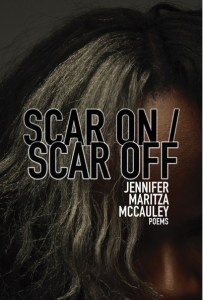
Jennifer Maritza McCauley teaches at the University of Missouri, where she is pursuing a PhD in creative writing. She is also Contest Editor at The Missouri Review and poetry editor at Origins Literary Journal. She has received fellowships from the NEA, CantoMundo, and Kimbilio. Her work appears in PleiadesColumbia Journal, Passages North, Puerto del Sol, and elsewhere. Her collection SCAR ON/SCAR OFF is available from Stalking Horse Press.

Jennifer says her style “depends on the subject matter, the genre I’m writing, or the speaker.” She says, “I enjoy free-verse and experimental poetry and I’m drawn to prose poem/lyric essay hybrids. With fiction or non-fiction, I like my narrative voice to fit the environment I’ve created. I generally have an interest in the pop and snap of language, and the intense focus on an image. I love playing around with linguistic mash-ups. My real-life voice code-switches often, and that impulse is reflected in my writing, I’m sure.”

Bekah and Jennifer connected after a review of Jennifer’s new collection, SCAR ON/SCAR OFF, appeared in the St. Louis Post Dispatch. We wanted to know more about this fellow Missouri poet and her writing, so here is our interview with Jennifer.

Q~Tell us a little about “WhenTrying to Return Home.” How is it representative of your work?

A~I’m interested in narrative poetry, how a poem moves, and how color holds literal and metaphorical meaning. In this poem, I wanted to tell multiple stories that explore the intersections of Afro-Latinidad, and issues of belonging, race, and cultural displacement.

Q~Did this poem come easily or was it hard to write? Is there a backstory you want to share?

A~It took some time! I wasn’t sure if I was ready to write about my own cultural disconnections yet. I was reading poetry that forced me out of my comfort zone, namely Nancy Morejon, and Cherrie Moraga, who are fearless. A few months later, I was asked to write a poem for Aspasiology in tribute to the wonderful poet Raquel Salas Rivera. I was inspired by Rivera’s poem  “suprasegmentacionalidades,” which has this terrific line “you are so much more than your translation. My jumping off point was thinking about how we are “more than our translation.” “When Trying to Return Home” (slowly) emerged soon after.

Q~What’s your writing process usually like?

A~Scattershot! Some pieces come out fast, others take years. I like writing late at night, and during writing sessions I warm up by reading something completely unrelated to my creative leanings. I’m a day-reader, and a night writer, unless I have a deadline. During the day, I’ll usually read work that is related to my research, composition exams, or creative writing. When I have a writing session, and I’m especially stuck, I like to read a short bit of something, but preferably unrelated to my project, sonically or subject-wise. I like my brain clear of direct influences. It might be a weird process, but the tension between me trying to figure out some problem on the page myself versus reading something unrelated to the project, helps me find my voice purely and gets the creative juices flowing. And most literature channels the human experience, so regardless I find access points and inspiration.

Before I started writing my historical novel, for example, which is set in the South during the Reconstruction Era, I spent much of my time reading as much Southern and period lit as I could, while doing on-site research and poring over history texts. During the actual writing sessions, when I hit a wall, I’d read Ezra Pound, Percival Everett or Pynchon. Completely unlike how I write and generally unrelated to the book. Before I write fiction, I often read poetry and vice versa. Many of the poems in SCAR ON/SCAR OFF I wrote at various times over the past few years, but before the actual writing sessions, I remember reading Lao Tzu passages,Octavia Butler interviews and Stanisław Lem, to name a few. I encourage my students to read outside of their interests, and I like doing the same. This isn’t a set rule for me during the writing process, but I find the trick helpful.

Q~In the review of your book in the Post Dispatch, they said you illustrate “with lyrical resonance how deeply intertwined family and social history can be.” Can you talk a little bit about the importance of this to you?

A~A through-line in my work, and especially in SCAR ON/SCAR OFF is how history, political landscapes, and familial ties influence who we become. I also like using poetry and lyric essays to explore subjects that are intensely personal to me. In this book, I wanted to examine how our ancestors, cultural communities and our connections to them reveal why we have scars, and how we heal them. It was important to me to pick apart my relationship to the collective, the personal, and the familial.

Q~Why did you choose the title, SCAR ON / SCAR OFF?

A~The title is a reference to the Rosa Parks quote: “Have you ever been hurt and the place tries to heal a bit, and you just pull the scar off of it over and over again.” The “you” and the “place” in that quote haunted me. Who the “you” and what the “place” of hurt could be, reflexively, generally and specifically. In Parks’ life, in the lives of my family, friends and communities, and in my life. I thought about why scars show up on our bodies, and when. We can ignore them, but still know they’re there. We can willfully pick at them or let them heal. The process of acknowledging, feeling bound to, or ignoring our pasts is its own kind of strength because we are taking back our agency. And, the scars that haunt our bodies might not be our own.

I was working on an essay about not liking my name and being distantly related to Rosa Parks and when I found that quote, I was inspired. My late friend, Monica A. Hand, wrote brilliantly about how the women we look up to linger forever in our lives in her poem “dear nina.” Her quote “The women I am from are wild; beautiful/This is what I know/When Lucille died, I tell my grand daughter/We are like Lucille trouble in the waters can’t kill us…” addresses scar-sharing and love, and the regenerative, healing power of connecting with our families, heroes, and children. The Parks and Hand quotes are epigraphs in the book. So, the title references ideas I wanted dig into in this collection.

Q~Who was your poetry first love?

A~Pablo Neruda, because my mother used to read his poetry to me as a kid, in Spanish and English. Toni Morrison, because her novels are like a tight hug; her prose is poetic.

Q~You’ve had a lot of experience editing literary journals including being a contest editor for the prestigious Missouri Review. What insights can you offer from this perspective?

A~I’ve been fortunate to work for journals with editors who give their staff, writers, and collaborators a great deal of creative space. In the editorial roles I’ve inhabited (The Missouri Review, Origins Literary Journal, Gulf Stream Magazine, The Florida Book Review, Sliver of Stone, and Fjords Review), there has been a genuine interest in developing the journal with the times, while maintaining a cohesive vision.

Working at The Missouri Review has been special. As Contest Editor, I coordinate our two annual contests, and, in the past, I’ve read general submissions and conducted audio interviews. Our editor Speer Morgan has a deep love for literature and enjoys talking to people about their day-to-day lives just as much as he loves reading. The whole staff is excited about what we publish and the submissions we read; it’s a fun, productive place to work.

Every journal has a different process for acceptance, and a unique vision for each issue. The Missouri Review has been around since 1978, and we get about 12,000 submissions per year. Submissions go through several rounds of review with interns and senior staff before they are published, and each contest has its own review procedures. There are many pieces that are almost accepted, but don’t make it for whatever reason. We don’t have room for everything we love, but writers who don’t get into TMR or place in the contest, often get into the journal later. We enjoy publishing unpublished, up-and-coming, and established writers. At the core Speer wants the essay, story, or poem to have an “about-ness” to it, that it can be analyzed from different angles and has something interesting to say about the human condition. At Origins, which is edited by the marvelous Dini Karasik, we like stories, poems, and essays that directly explore how identity and upbringing inform a literary work. I’m happy I worked for every literary journal I have, and I always encourage writers to read submissions for a magazine, literary agency or publishing house, even temporarily. You learn a lot about your own writing from the experience. And submit, submit, submit!

Q~There are lots of publications out there. What are some literary gems you feel deserve more attention? Why will we love them?

The Missouri Review is currently looking for submissions for our 11th annual audio contest, judged by Avery Trufelman. (Deadline, March 15). Origins Literary Journal is looking for submissions in all genres. Some of my other favorite journals are Pleiades, Queen Mob’s Teahouse, LunaLuna, Glass Poetry, Kenyon Review, PANK, Vinyl, Kweli, Chicago Quarterly Review,  The Journal, Sliver of Stone, Fjords Review, Gulf Stream Magazine, and TriQuarterly. My amazing friend Ashley M. Jones, is looking for submissions from Southern writers at Southern Humanities Review. These journals take an interest in writers from all backgrounds and styles, and the work they publish is consistently engaging.

Q~Where can readers go if they are interested in reading more of your work?

A~My book is available on Stalking Horse Press’s website, on Amazon.com. Links to my work are on my website. You can also find me on Twitter and Instagram.

Scar-On-Off-Store-Image

Addictions / The Ramingo’s Porch interview with Bekah Steimel

Addictions

by Bekah Steimel

as universal as love and math
as personal
as the scars of our secrets
we conjure the angels of amnesia
with a cocktail of spells
specific incantations
masquerading as pills
they appear just in time
always just in time
and we commandeer their wings
flying first class in clear skies
putting space and time
between us and our mummified memories
that refuse to rot
and crumble to ash
we rise when they do
strapping feathers to our wounds
until we lose altitude
and nose-dive back into reality

First appeared in The Ramingo’s Porch 2018
rp2coverdraftjeff2-copia

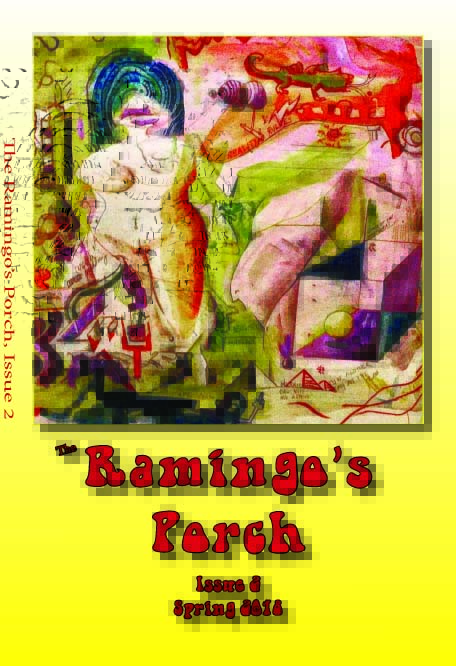
Four of Bekah’s poems–including the above poem–were recently published in the “Love, Spring & Revolution” issue of The Ramingo’s Porch. They also interviewed Bekah. Here is that interview.

Q~How long have you been writing? 

A~My Grandparents printed and framed a couple poems I wrote in fifth grade.  So, I have always been scribbling down my thoughts. But, I kept everything to myself.  I met my wife, who was an English teacher at the time, thirteen years ago.  I gradually began showing her all of my writing, and years later I am working on a poetry interview at 2 a.m.

Q~What do you consider to be your greatest accomplishment as a writer? 

A~Honesty.  I think my willingness to fix a spotlight on my struggles…to track them.. enables me to connect with readers in a really pure and gritty way.

Q~What projects of yours have been recently published? 

A~Since January, I’ve begun posting interviews on my website with female-identified and non-binary poets.

Q~Where can we find your work? 

A~I have links to my publishing credits on bekahsteimel.com, or you can Google me.

Q~How do you react to rejections?

A~I swipe it into a special rejection folder in my email.  I never read a rejection twice.

Q~How do you react when one of your submissions is accepted for publication? 

A~Celebratory casino trip

Q~What is your best piece of advice on how to stay sane as a writer? 

A~I would never advise that.  Writing is like some kind of padded room that it is safe to go bat shit crazy in.

Q~What is your favorite book? 

A~Jeanette Winterson’s Written on the Body

Q~What makes you laugh? 

A~Nothing makes me laugh harder than playing pranks on my wife. Sitting back and waiting for her reaction, trying not to laugh, is such a high for me.

Q~What makes you cry?

A~Missing my dog, Riley.

Q~What is your preferred drink while you write? 

A~Up until a few weeks ago when I was diagnosed with liver damage (no, really), it was vodka and Coke. Now, it’s just Coke.


See the interview here. Order a copy of The Ramingo’s Porch Issue #2.

One (In Two Parts) / An interview with Lyd Havens

One (In Two Parts)

by Lyd Havens

they call me rapid. water in the winter. fish stuck under the manic of me, gaping and slowly crimson. i’ve had four hours of sleep and i want to kiss the most typical of mouths—the mouths that don’t understand but are sympathetic. there is more to this. i dream of what i have never experienced with my eyes open. i see myself, and another girl. we are pressed against undressed pillows, hands grabbing at what does not feel real to me. i don’t know if there’s a word for that.

***

my mom says that during an episode, my laugh changes.she won’t explain how. i tell my therapist i don’t know how to distinguish mania from the ‘normal’, hyper-sexuality from the ‘growing up’, and she doesn’t explain how to solve this either. i’m left with too many comparisons for my body: jar full of loose change.guilt. pile of unfinished eulogies. again, the frozen river: trout beneath the becoming and the risks.i fall under the lullaby of the current, and i taste blood. i tap at the ice, and there is no one thereto explain how to get out. i feel my lungs peel back like citrus, and realize there is no such thing as reliable.

First published in Winter Tangerine 2016.

LydJan28Lyd Havens is the author of Survive Like the Water (Rising Phoenix Press, 2017) and the self-published chapbook Eight of Resilience. Their work has been published in Winter Tangerine, Cosmonauts Avenue, and Up the Staircase Quarterly, among others. They live and thrive in Boise, Idaho.
Lyd’s work was brought to our attention by poet Marisa Adame, whom we interviewed here. We offered Marisa the opportunity to “pay it forward” by choosing another poet to interview, and she chose Lyd. Marisa said, “Lyd Havens’ work stood out to me so strongly that I Googled their name to find more of their work before I’d even finished reading Winter Tangerine’s “Reshaping the Bell Jar” issue. Their piece struck me as the perfect balance of simple truth and vivid imagery—that is, the poem had the ornamentation of metaphor while still communicating specific details of the story. I felt I had a lot to learn.”

So, here is Marisa’s interview with Lyd.

Q~How would you describe your style?

A~My style is conversational and vivid. Any poem I write is being read aloud as it’s being written, and I’m always trying to write things that work well both being read and being heard. I don’t know whether this is because I first started writing poetry while participating in poetry slams (which I still do), or because so many of my poems are born out of different conversations I have with different people I love, but my poems feel like an extension of my daily speech patterns. I’m just usually a lot more eloquent in my poetry.

Q~Tell me about “One (In Two Parts)” and what drew you to the Winter Tangerine theme, “Reshaping the Bell Jar”?

A~One (In Two Parts) is about having Bipolar I and is one of the only poems that I’ve written about that (still, even two years after it was written and published). It was actually fairly easy to write, all things considered—a lot of the images about a frozen body of water were from a dream I had as I was coming down from a manic episode, and I wrote the whole poem in one sitting (which doesn’t always happen with me). After I finished it, I immediately knew I was going to submit it to the “Reshaping the Bell Jar” issue of Winter Tangerine. I’ve worked with WT a lot over the years (I was an intern for them in 2013, and was a reader for another one of their themed issues, “Fragments of Persephone”), and that particular theme was incredibly important to me. It’s probably one of the most important (to me) poems that I’ve ever written, and finding out it means something to others is always so wonderful, especially considering how infrequently Bipolar Disorder is talked about anywhere.

Q~What’s your writing process like?

A~Almost every poem of mine starts with a single image or sentence that pops into my head, and then I go from there. As I mentioned earlier, most of my poems aren’t finished in one sitting. It can take anywhere from a few hours in the span of a day to three months for anything I write to be truly “finished.” I also have to read the poem out loud as I go on writing it, so as it’s being written, I’m also usually playing around with diction, tone, volume, speed, and other performance aspects. I can write pretty much anywhere, but I have to finish poems in private and alone.

Q~What’s one piece of advice you want to share?

A~Give your poems time, and give yourself time. I feel like poems can be pretty stubborn things, and sometimes the timing just isn’t right getting one out, whether it’s because of the subject matter or your own headspace. I’m a huge advocate for never forcing anything, especially poems. You’ll get there when you get there, and when you do, it’ll be better than anything you would have had to pressure out of yourself.

 Q~Are you involved in your local poetry scene? What’s it like?

A~I’m very involved in the poetry scene in Boise, and I absolutely love it! There are two poetry slams every month, and they’re always just the most amazing time. There’s also a literary festival every month that’s in association with the Treefort Music Festival, Storyfort. It’s coming up in March, and there are all sorts of readings and panels planned that I’m so, so excited about. It’s definitely a smaller community, but incredibly welcoming and kind and fun. I absolutely love being a part of it.

Q~What drew you to slam poetry? 

A~I first started competing in poetry slams when I was about 15, and at the time I was really shy while simultaneously having a lot to say. Past traumas had left me feeling like I couldn’t ever be heard, but after seeing a flyer for a slam in my hometown, I thought that that might be a good outlet for that. Slams have a very special kind of vulnerability to them—it’s passionate, versatile, and honestly thrilling. Poetry slams helped me learn how to use my voice.

Q~Who are you reading now?

A~I just finished Whereas by Layli Long Solider, which is an absolutely spectacular collection that challenges the “expectations” of language, and a lot of the documentation (or lack thereof) of how the United States government has treated indigenous peoples. I also recently finished Hanif Abdurraqib’s collection of essays, They Can’t Kill Us Until They Kill Us. He’s one of my favorite poets, and this collection is probably one of the best things I’ve read in a long time (maybe my whole life). I’m currently reading When I Grow Up I Want to Be a List of Further Possibilities by Chen Chen, Just Kids by Patti Smith, Words in Your Face: A Guided Tour Through Twenty Years of the New York City Poetry Slam by Cristin O’Keefe Aptowicz, and a lot of singular poems by my friends or that my friends recommend (one recent example: “Ode to Mennel Ibtissam Singing Hallelujah on The Voice (France), Translated in Arabic” by George Abraham).

Q~Where can readers go if they are interested in reading more of your work?

A~My website is www.lydhavens.com I’m also on Twitter and Instagram 

Q~Is there anything else you’d like us to know?

8oREtsy1A~I just self-published a small chapbook full of poems about joy, healing, and gratitude, which is for sale here. It’s probably the most special project I’ve put together, and the covers on the physical copies are all hand-painted! Also, I’m going to be reading poems sort of all over the place in the US this year. There’s a whole list of dates on my website under “Events”—if any reader can go to any of them, I’d love to see them there! Please come say hi 🙂

marisa

Marisa Adame, storyteller/creative from Dallas, Texas, values work that balances as much as it deconstructs. Her work has appeared in Crab Fat Magazine, Red Savina Review, Hold the Line, and St. Sucia zine. You can find her on YouTubeInstagramFacebook, and at marisaadame.com.