Tag Archives: #poetblogrevival

Belief / an interview with poet Lesley Wheeler

Belief

by Lesley Wheeler

Gift or delusion, I don’t have it. I see
the burnt petals of the dogwood tree,
sacred; breathe the spicy rot of last
year’s oak leaves after rain, sacred; taste
the dirty wild onion, heavenly. Not
one, but many. Not up there but
down with us, the broken sidewalks, the bugs.
The gods don’t give dictation. Ring-necked doves
devise their own flight plans. The lightning hurls
itself. Nobody tells the wind to cry.

That doesn’t mean we shouldn’t listen
and watch. Reception’s a religion when
everything whispers. Your hand to mine.
Starlings to branch. Signal and noise, ensnarled.

from Radioland (Barrow Street Press, 2015) Originally published in Unsplendid, 2013.
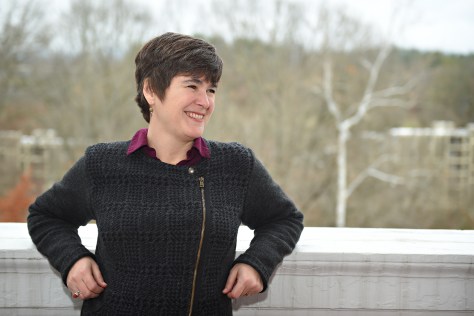
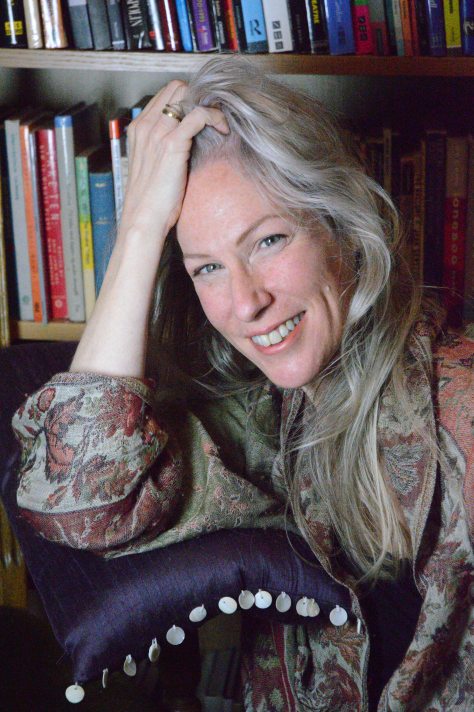
15headshot.jpgLesley Wheeler’s books include Radioland and Heterotopia, winner of the Barrow Street Poetry Prize, and the chapbook Propagation. Her poems and essays appear in Cold Mountain Review, Ecotone, Gettysburg Review, and elsewhere, and her next collection will be published by Tinderbox Editions early in 2020. Wheeler teaches at Washington and Lee University in Virginia.

Lesley says of her style, “My teenage obsession was with David Bowie. I’d like to keep pivoting, as he did, but I’m probably not so chameleonesque. I do know I’m a sound-driven writer who likes to play with imperfect rhyme and other aural textures.”

Lesley and Bekah connected via The 2018 Poet Bloggers Revival Tour. We wanted to know more about Lesley and her writing, so here is our interview with her.

Q~Tell us a little about the poem we’ve included. Did it come easily to you or was it hard to write? Is it representative of your work?

A~“Belief” is a slant-rhymed, metrically rough sonnet, and that’s a go-to form for me, something I can write when nothing else is coming. Normally I labor over poems for months or years, but that one basically arrived in its present form—one of those gifts you occasionally receive if you write a lot. It’s also representative of my work because, maybe paradoxically, I’m a skeptic who is deeply attracted to spiritual questions.

Q~What are your poetry highs/lows of the last year?

A~I actually spent most of the year sending work out and getting a nice share of magazine acceptances but feeling low about the arc of my poetry writing career overall. I was shopping around a poetry ms I’ve alternately been calling She Will Not Scare and Turning Fifty in the Confederacy, and while I know it’s my best work yet, it wasn’t obvious to me where it would land. (The overlap between those potential titles probably gives you a pretty good sense of its scope!). Just this month, I received the kindest fan letter from Molly Sutton Kiefer at Tinderbox Editions. I’m thrilled to pieces she wants to publish my book, whatever it ends up being called. I’ve reviewed a couple of their titles, and they’re beautiful inside and out. So, 2018 is ending on a high for me.

Q~What’s one piece of advice you want to share?

A~I’m fairly new to editorial work, having just become poetry editor of Shenandoah this fall. It’s a revelation, working this end of Submittable, and I recommend the experience. One reassuring thought from a newbie: plenty of impersonally rejected work may have actually been read carefully and appreciatively, even if the editor doesn’t have time to send personalized notes; also, sending towards the beginning of a submission period can be worthwhile, because editors may be less tired and more game (who knew?). A perhaps less reassuring observation: while some of the work I reject is just not professional—I’ve been startled by the level of overt sexism in a small but memorable proportion of the poems I receive—most of it is pretty good. The poet just needs to rethink an unsatisfying ending, say, or cut the weaker lines (from my point of view, although somebody else might think the pieces are perfect!). My advice would be: wait a while, bring in your tough-minded friends for feedback, and revise with utter ruthlessness before you hit send. Poetry keeps. Of course, I don’t always take my own advice, either. Handling a hot new draft is just so exciting, you want to share it.

Q~There are lots of publications out there. What is a literary gem you feel deserves more attention? Why will we love them?

A~I’m fond a lot of little magazines (Sweet and Flock have been good to me this year), but I’ll focus on a print magazine, Cherry Tree. It’s full of strong, risky work (where else can you send a broken rondeau named “Perimenopause”?) and I love their “Literary Shade” feature. Plus they’re really kind to their authors. We need that love and support so much.

Q~Your partner is also a writer. What’s that like?

A~Mostly, it’s good! Chris is a scholar of comics who has started working in visual modes, so he and I started collaborating this year. Our first poetry comic was just accepted by Split Lip Magazine, and that’s giving me delusions of hipsterism. It’s called “Made for Each Other,” which sounds romantic, but it’s about ambivalent, aging, gender-ambiguous robots, so it addresses marriage from a pretty strange slant. He’s also my first reader and a very helpful one. One tougher aspect of two writers making a life together: it was hard for two desperate writers to negotiate time when the kids were little. And now that our youngest is about to fly the coop, I’m worried that he and I will have to work hard NOT to work hard all the time, just out of sadness and confusion. We were so time-starved for so long.

Q~Are you involved in your local poetry scene? What’s it like?

A~I live in a really, really small town (maybe 7000), and all my students are undergraduates, so while I organize a lot of events, from marquee writers to student Haiku Death Matches, it’s hard work to draw in audiences. I helped run a local monthly reading series for a few years, but it was exhausting. I live in a beautiful place, and I have talented students and colleagues, but I do wish I had more local poetry company. The web mitigates that—so thank you for being one of those long-distance connections!

Q~What’s a Haiku Death Match? Sounds like fun.

A~A Haiku Death Match is a competitive poetry event; I first saw one while attending the National Poetry Slam in Albuquerque in 2005. Poets play in rounds, and from each pair, the person who wins the best two out of three moves up in the brackets until there’s a single champion. As in slam, the judges are amateurs, so you’re not aiming to please anyone who has serious expertise in a venerable art form—you’re just trying to delight ordinary listeners. I stage these periodically when I’m teaching contemporary poetry to English majors. Spoken word is an important scene in U.S. verse, and I want my students to experience it live, but we don’t have a venue anywhere near here. My solution is to make my students do it, and haiku are not too intimidating for people who don’t consider themselves poets. The results are always high-energy and hilarious. I make the prize more miniscule every time—this year just 1 point of extra credit—but that just seems to egg them on.

Q~Where can readers go if they are interested in reading more of your work?

A~I blog about poetry and sometimes post new publications here. You can buy my collections directly from the publisher or from that problematic but incredibly handy online book-superstore—or contact me directly if you crave a signed copy (sometimes I draw pictures). You can also connect with me on Twitter, Instagram, and Facebook.
Resurrection Party / an interview with poet Trish Hopkinson

Resurrection Party

by Trish Hopkinson

You ask me to take the Christ costume
out of the closet. It’s been a year

since your consciousness went
missing—stunned out of you

into the road: collision of machine & boy,
no pulse in your wrists, your ghost

gasping. Crash doesn’t capture it: your halo
ringing as it bounced from gutter

to sidewalk, singing down concrete
end over end. I wonder, did you throw

your shoulder against your eyelids, wanting
to burst through those last slits

of light? Your recollection of this
is dead, as is the seven days

after. Yes, the neuro-surgeons were pleased
when you answered: your name, the year, but didn’t

know your whereabouts. You told us in nature, lying
hazily in chirping forest, or at a tattoo parlor

getting ink on your abdomen: the half-arch
of a rainbow. Sometimes, you’d remember

you’re in the neuro ICU & we’d
celebrate. Funny—the detachment of body

and brain. I smile when I see the party photos
you post online: you, dressed as Christ,

thorny crown, death metal makeup,
bottle of Hennessey in your hand.

First appeared in Tinderbox Poetry Journal 2017 (To hear Trish read this poem click here.)

1810-01 Trish Hopkinson 078 (1).jpg

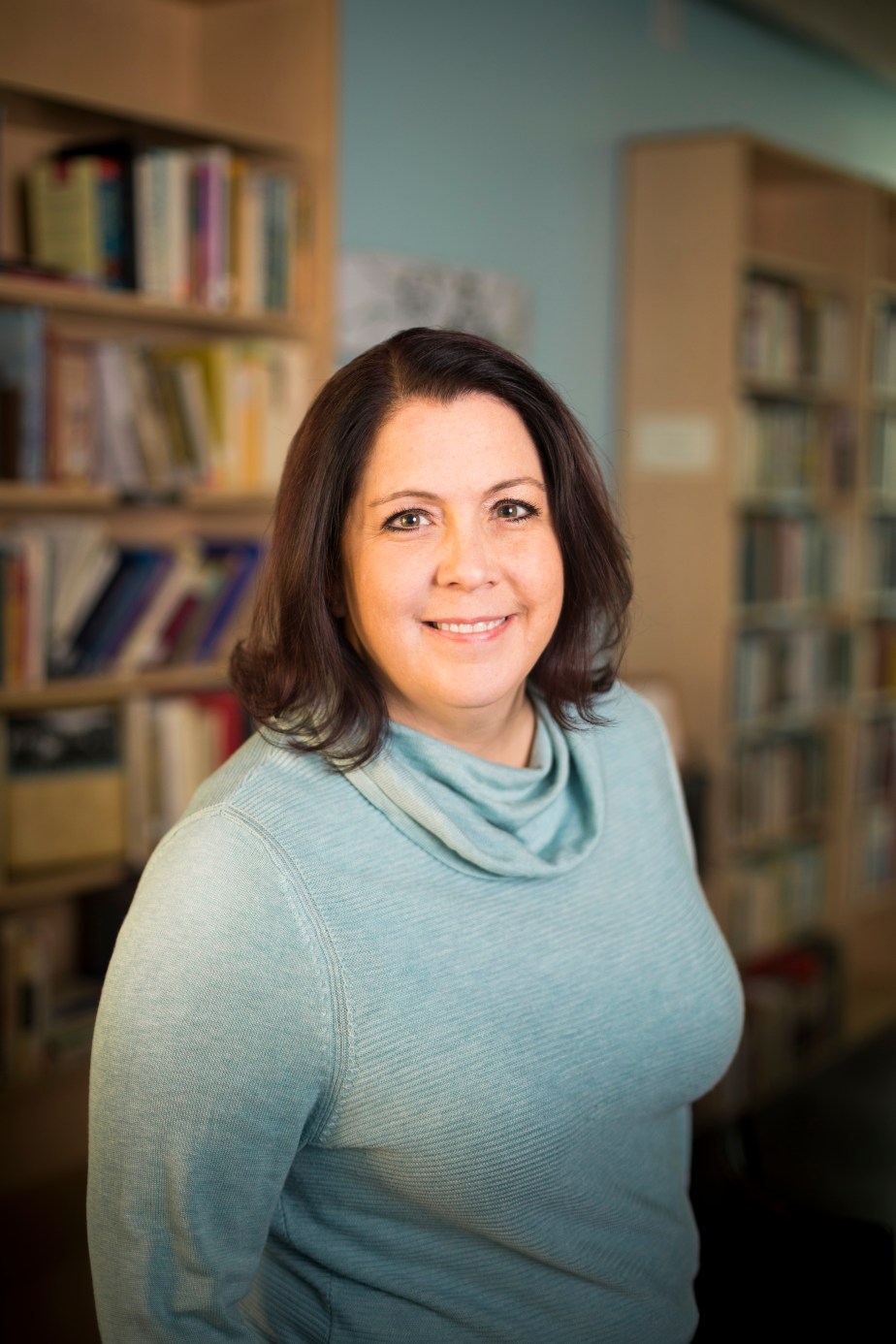
Trish Hopkinson is author of three chapbooks and has been published in several anthologies and journals, including Tinderbox, Pretty Owl Poetry, and The Penn Review. You can follow Trish on her blog where she shares information on how to write, publish, and participate in the greater poetry community at http://trishhopkinson.com/.

It was from Trish that we first learned of The 2018 Poet Bloggers Revival Tour, and she was part of the inspiration for this interview series. Trish and Bekah were published together in Shabda Press’s Nuclear Impact: Broken Atoms in Our Hands in 2017, and Bekah was honored when Trish chose to read one of Bekah’s poems along with her own in a reading for the anthology. We wanted to know more about Trish and her work, so here is our interview with her.

Q~How would you describe your style?

A~My approach to writing poetry is to quickly write a first draft and then revise it a million times. I love workshopping and missed it so much after I graduated end of 2013 with my undergrad in English/Creative Writing I co-founded a poetry group called Rock Canyon Poets. We meet monthly to workshop each other’s poems, and we also have a private web site where we can do more of the same.

My poems vary in form, but are most often free verse. I’m a sucker for a great internal rhyme, a little alliteration, and how the words are spaced on the page. I like to play around with stanza length, caesuras, white space, etc.

Q~Tell us a little about the poem we’ve included with your interview. Is there a backstory you want to share?

A~“Resurrection Party” is one of several poems in my latest manuscript about my son’s recovery from a life threatening accident that occurred in 2015—he was hit by a speeding pickup truck in an intersection in downtown Salt Lake City while riding his bicycle to meet friends. The poem is a true story, and I love the way it shows his personality and creative spirit. Fortunately, he recovered almost completely, except for the loss of his sense of smell. The experience was the most difficult thing I’ve had to face as a parent. It took me a couple of years to start writing the poems and even then, these were the most emotionally exhausting poems I’ve written. I thought about what to write, how to write it, took notes, and considered whether to write them at all for months before drafting the first poem. Then, it took me months to determine whether a chapbook length manuscript on this topic would be the best fit. I’ve sent it out to several presses and contests, so we will see what happens next. So far, only two of the poems from the collection have been published. But, my son has read them all, shares them with his close friends, and heard me read several of them at multiple events. I love that he’s so proud of them and that he has an appreciation for my work and poetry in general.

Q~Your contributions helping other poets through your blog and social media were part of the inspiration for this interview series. What made you decide to do this work?

A~I’m so thrilled to hear that my blog helped to inspire your interview series! My blog really has been a happy accident. I originally created the site just as a place to post poems for others to read when asked about my work. As I started submitting and looking for writing resources online, I found that my blog was a good place to save them. Then I shared one of my posts in a Facebook group and received such positive response, I decided to keep sharing. I also noticed that in the writing community some writers are competitive—they don’t want to share opportunities for fear that someone else will be published or win the contest instead. It seems to me that poetry just does not get enough attention in general, and the more I can share, the numbers of poetry readers might just grow, which means a larger market for my work while supporting other poets along the way. I kept trying new things based on my own research, like lit mag submission calls, then interviews with editors, guest blog posts, etc. and continued to get more followers and great feedback. I’ve learned so much along the way and I’m still learning every day.

Q~How do you balance your time between your own writing, the work you do to help other writers and your life outside of writing?

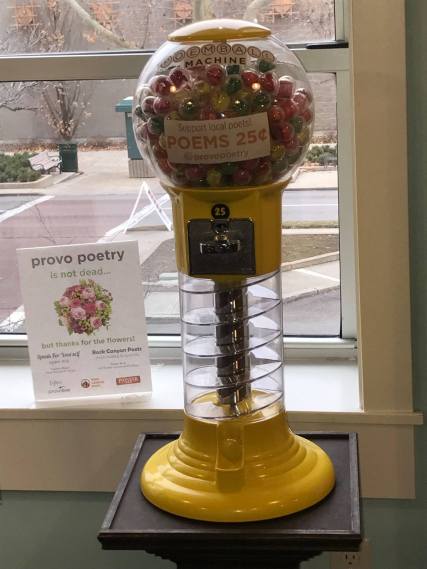
A~This is a great question. I do have a lot of poetry projects going on, locally with my poetry group Rock Canyon Poets, Provo Poetry poemball machines, Poetry Happens (a monthly radio feature of poetry events in Utah), an annual community writing workshop, two annual anthologies, festivals, readings, open mics, the list goes on and on. And, of course, a full-time career in software product management, my blog, and my own writing. It’s a delicate balance to be sure. Ultimately, all the work I do for poetry feeds and supports my own writing practice as well. I’m continually learning, finding inspiration, and growing as a writer. Timewise, I focus a lot on efficiency, large blocks of time to work on specific projects or to write, so I’m not stopping and starting too often. And, I have a very patient husband and family, who let me spend hours in my office uninterrupted. They know how important poetry is to me and have been an amazing support system. I often combine poetry activities with other things—like weekend trips, family time, dinner before or after an event, etc.

Q~What is your local poetry scene like?

A~It’s growing! There are several open mics, lit mags and journals, bookstores, organizations, and events. I’m doing all I can to spread the word about poetry happenings and to involve the general public. That’s really what the Provo Poetry project is all about. It too, started on accident; my friend and co-founder Marianne Hales Harding had a couple of gumball machines and we thought, why not fill them with poems? We applied for a mini grant from Utah Humanities and now have four machines—one in a café, one in a bookstore, one in a radio station, and one we take to events. The machines have been successful enough to fund supplies, new machines, and even for an annual cash prize poetry contest. The coolest part is that the machines include poems from Utah poets—bringing new readers to poetry and supporting local, living poets. You can learn more about Provo Poetry on our web site here: https://provopoetry.org/about/

pioneerbookmachine1

Q~There are lots of publications out there–many of which you have featured on your blog. What is a literary gem you feel deserves more attention? Why will we love them?

A~Sundress Publications is doing so much incredible work in the writing community. They have multiple programs/projects with opportunities for poets and writers, including Sundress Academy for the Arts, SaftaCast, Poets in Pajamas, and several literary publications: Best of the Net, Stirring, Rogue Agent, Pretty Owl Poetry, Agape Editions, cahoodaloodaling and more. Their staff are generous and wonderful to work with, and they don’t charge submission fees for regular submissions.

Q~What’s one piece of advice you want to share?

A~Most importantly, when submitting to literary markets, I encourage poets and writers to send to several (simultaneously if possible) and to not take rejection as a reflection of the quality of their work. There are many reasons why a piece may not be a good fit—maybe the topic has recently been covered in a previous issue, maybe similar work has already been accepted, maybe the piece doesn’t fit well within the aesthetic of the issue or collection, maybe they’ve simply ran out of room. If I believe in my work, I’ll keep sending it. One of my poems was rejected 31 times before being published. I’m sure that record will be broken in the future.

Q~What online resources would you like to recommend?

A~I have a list of my favorite “Writing Resources” links on my blog. You can find it by scrolling down past the Twitter feed on the right sidebar. Specifically, I love Entropy, The Review Review, Winning Writers, Authors Publish, Erika Dreifus, and Publishing and Other Forms of Insanity.

Q~Who are you reading now?

A~Most recently I’ve been reading Tommy Pico, Tracey K. Smith, Paisley Rekdal, and Lance Larsen. And, I’ve been completely addicted to the Commonplace podcast. It’s so fantastic.

Q~Where can readers go if they are interested in reading more of your work?

A~I post all my publications on my blog here: https://trishhopkinson.com/poetry/. I also sell signed copies of my third chapbook Footnote in my store here: http://trishhopkinson.storenvy.com/products. You can also connect with me on Facebook, Twitter, and Instagram.

Ursula / an interview with poet Andrea Blythe

Ursula
Our Lady of Unrepentant Self Possession

by Andrea Blythe

You are power—
holding a draught to cure in one hand, poison
in the other. You have a talent
for practical magic, for drawing out
the latent capabilities of plants,
giving weight to whispered words.
You melt through the water, body
round and sleek, tentacles
stretching to claim
all the sea you can hold.

You never asked
to become a patron
for unfortunate souls,
those merfolk so full
of  desperation, covetous
for more love, more beauty,
more strength, more and more and more.
They beg for your gifts, then blame
you for the price they have to pay.
What can you do if they fail
to read the contract? Should you worry
for a princess so dumb
she can’t figure out
how to use ink
when she has no tongue?

In another story
a mermaid loves a prince
who has no interest in mute girls,
so she falls apart
into sea foam.

In another ending
you say fuck it
and take your seaweed slick curves
off to another tidepool.
You hang with jelly girls and laugh
with the manatee mamas.
You flirt with the walrus men, fingers stroking
the hardness of the tusk. Your tentacles
are full of caresses and you
have oceans of love to give.

First appeared in Yellow Chair Review 2016.

Andrea-Blythe-headshot-768x768

Andrea Blythe bides her time waiting for the apocalypse by writing speculative poetry and fiction. She is the author of Your Molten Heart / A Seed to Hatch (2018) and coauthor of Every Girl Becomes the Wolf (Finishing Line Press, 2018),  a collaborative chapbook written with Laura Madeline Wiseman. She is a cohost for the New Books in Poetry podcast and serves as an associate editor for Zoetic Press.

Andrea says of her style, “It’s not static. I tend toward free verse, but have worked with prose poems, erasures, and formal poetry (although that one’s rarely successful for me). I shift the style of a poem to suit the tone or voice I’m working with. The shape and voice need to reflect the content or the poem won’t feel right to me. I enjoy the variation, but it can make it hard to assemble them into any kind of cohesive collection at times.”

Andrea and Bekah connected via The 2018 Poet Bloggers Revival Tour and both had poems appear in the same issue of Yellow Chair Review, including the above poem. We wanted to know more about Andrea and her writing, so here is our interview with her.

Q~Tell us a little about the poem, “Ursula.” Is there a backstory you want to share?

A~A few years ago I participated in a 30-day poetry challenge hosted by ELJ Publications (now closed), and I used the opportunity to explore the idea of the sacred or spiritual through the framework of pop culture. I focused each poem on a female character from media I loved and addressed them as though speaking praise or prayer as though they were saints. Some of these poems honored these characters as figures of power, some as figures trapped by their iconic status, some as representations of my own personal struggles.

“Ursula” is one of the poems that came out of this challenge. I wanted to consider this woman and witch of the sea, who is considered the villain of the tale, from another angle — giving her space to be more than how she was drawn, a person enough to have desires beyond mere power.

Altogether, these poems make up a chapbook, called Pantheon, which I’m currently reworking in the hopes of sending it out and finding it a home.

Q~Do you find yourself returning to certain themes or subjects in your work? What are they and why do they resonate with you?

A~I like the idea of liminal spaces, the place in between, when someone or something is not quite one thing or another — and that’s something that comes out in my work quite a bit. For example, I wrote a poem a while back about Annie Taylor (the first person to go over Niagara Falls in a barrel), which focuses on the act of falling, existing in that place after jumping off and touching down. There’s something about the in between, the moment right before when anything can happen that fascinates me.

Another theme that I see coming through more often lately is an expression of underlying loneliness, expressions of longing for companionship and touch. That’s coming directly out of some deep down kernel within me. I enjoy and cultivate solitude sometimes, since it can be comforting, but I have to remember not to wrap myself so tightly within it as to feel disconnected from the world and the people around me.

Q~What’s your writing process like?

A~I’m a fan of the shitty first draft as proposed by Anne Lamott in Bird by Bird. I’ll ponder an idea for a while and then dump it onto the page, letting it be rough and haphazard and wrong. In the first draft stage, I’m still trying to figure out what I’m trying to say, and I won’t fully know the scope of the poem or story until I have words to play with and move around. The drafting process can happen by pen and ink or by computer, but for the revision process I almost always move to hard copy — something I can mark up, cross out, ramble out gibberish in the columns, or cut into strips. The tactile aspect of working with a physical page helps me to work through what’s not working and trace a path to figuring out what will work.

 Q~Your two most recent works are a collaborative book and a collection of erasure poems. How does working with another poet or source material change your writing?

A~Working collaboratively with Laura Madeline Wiseman on our collection Every Girl Becomes the Wolf (Finishing Line Press) and other projects has strengthened my writing. During our collaboration sessions, I find there’s a tug and pull, in which I am simultaneously offering up space in a piece in order to allow Madeline’s voice into the poem while also claiming room for my own voice. Our poems are written together and then jointly edited, so that our voices become layered over each other to the point that in some completed poems, I can’t tell where her words begin and mine end. Throughout it all, I’m continually surprised by Madeline’s skill in choosing words and editing for clarity. It’s an intimate education in another person’s method of writing, which has provided me with new tools to approach my own writing.

In the act of creating erasure poetry presents an interesting restriction. Rather than the infinite possibilities of the blank page, I’m confronted with an existing text (in the case of my collection A Molten Heart / A Seed to Hatch, I was working with the product descriptions in Trader Joe’s Fearless Flyers). The puzzle of striking out words to find the poem left behind stretches me into new directions — Can I siphon out a new meaning from these words? Are there enough of them to complete a particular thought? Do I need to modify the direction of the poem because the available words are steering me another way? It’s resulted in some surprising, surreal turns that I might not have taken in a standard free verse poem. It’s a kind of freedom nested within the restrictions, which can in turn empower me to explore more playfully when I approach an empty page.

 Q~What’s one piece of advice you want to share?

A~Advice I have to remind myself of over and over again — make space for yourself and your work. That includes time and energy for both the writing itself and the things that reinvigorate your writing, like reading, attending poetry events, walking, stretching, meditating, or anything that helps keep words alive for you. It’s so easy to get lost in the day-to-day routine of work and chores and TV binge watching and on and on — to the extent that time passes, and the work you love has been forgotten. Often my moods are influenced by how much or how little I’m connecting with my own writing. It doesn’t have to be daily, but regularly creating that space to write, to read, to interact with words is so essential.

Q~Who are you reading now?

A~I’m currently reading several poetry books at the moment. If They Come for Us by Fatimah Asghar is blowing my mind with its beauty and inventiveness regarding both lyric and form. Claudia Rankine’s Citizen: An American Lyric is so moving in how it approaches its exploration of race. And, I’m also enjoying Basement Gemini by Chelsea Margaret Bodnar, a beautiful chapbook that explores female agency through horror tropes. 

Q~Are you involved in your local poetry scene? What’s it like?

A~The poetry scene in the Bay Area, California is amazing. There seems to be readings, slams, open mics, or other events going on just about every week, whether in San Francisco, Oakland, Berkeley, San Jose, or other towns. It’s fantastic to have this community so close at hand, and I value all the amazing creators around me, who inspire me with their words and generosity. They make me want to work harder and improve my craft.

I’ve gone through periods when I was participating or witnessing in many of these events on a minimum of a monthly basis, but lately I’ve been hermiting, tucked away in the quiet of my own home. I miss this community and camaraderie, and part of me wants to feel guilty about not being more active than I have in the past. But, I’m giving myself space to just be quiet in this way, providing support as much as I can from a distance, with the understanding that there’s no wrong way to poet, and sometimes you just need space for a while. I’ll jump back in when I’m ready.

Q~Where can readers go if they are interested in reading more of your work?

A~A couple of my Pantheon poems have been published online, which can be read here: “Carrie White: Our Lady of Blood” and “Sarah Connor: Our Lady of Self Determination.” I’ve also been working on a series of found poems assembled from words in Stephen King’s The Plant, a number of which can be found at Quail Bell, including: “Morning, Wrapped in Maple and Pine,” “A Fallen Heaven,” “A Wake,” “I Have Tried to Explain,” “A Last Missive,” and “Student of More.”   Some examples of the collaborative poetry I write with Laura Madeline Wiseman can be found here. I can also be reached on Twitter and Instagram, through my email newsletter, or via my website.

Not This / an interview with poet Hyejung Kook

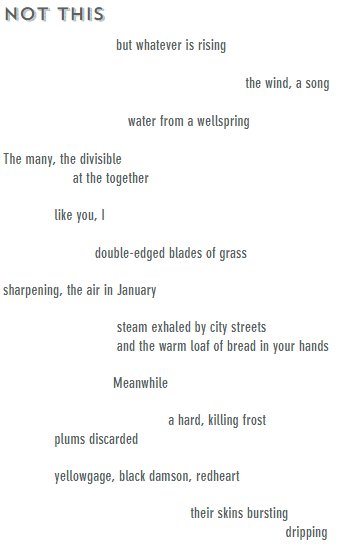
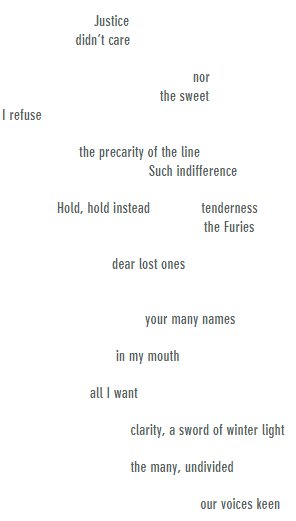
Not This

by Hyejung Kook

notthis1

notthis2.PNG

First appeared in The Ellis Review 2018.

kook

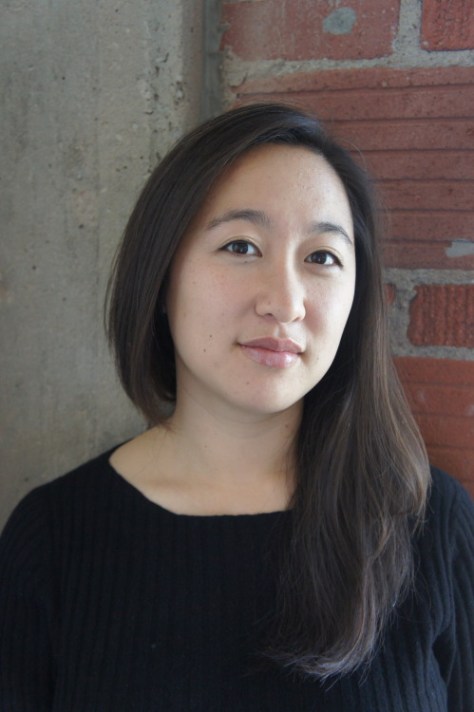
Hyejung Kook’s poetry has most recently appeared or is forthcoming in The Massachusetts Review, Glass: A Journal of Poetry, Hyphen Magazine, and Pleiades. Hyejung was born in Seoul, Korea, grew up in Pennsylvania, and now lives in Kansas. She is a Fulbright grantee and a Kundiman fellow.

Hyejung and Bekah connected via The 2018 Poet Bloggers Revival Tour. We wanted to know more about her and her writing, so here is our interview with her.

Q~Tell us a little about the poem we’ve included. Is there a backstory you want to share?

A~I’m so grateful to The Ellis Review for publishing “Not This.” The poem grew out of two different pieces I wrote while participating in the Tupelo Press 30/30 Project back in 2015, which involved writing thirty poems in thirty days. I usually write slowly, so the pressure cooker of having brand new drafts shared daily on the Tupelo 30/30 website was both terrifying and generative. The first piece was an erasure of a poem by Margaret Rhee—the gorgeous phrase “the precarity of the line” comes from her. The second piece was called “Not this but” and had “whatever is rising” as the first line, but the imagery was rather diaphanous, full of sleet and unpruned wisteria and birds and the moon.

Revisiting these drafts, I realized they had the feel of an exercise rather than necessary utterance. When I tried to dig deeper, I found myself grappling with personal loss alongside the many recent killings of people of color—the murder of indigenous women and black folx like Michael Brown, Eric Garner and Sandra Bland, as well as the shooting death of Srinivas Kuchibhotla at a Kansas bar just half an hour from my house. Nature imagery still permeates “Not This,” but with violence as well as beauty, tenderness matched with fury. In retrospect, I was also channeling some of George Oppen’s Of Being Numerous and his preoccupation with multitude, justice, and clarity. This was a challenging poem to write, but it also opened up spaces of possibility for me—this is my first poem to engage more directly with current events.

Q~How would you describe your style?

A~Poetry happens in a moment of collision between myself and the world. On occasion, I strike sparks. If I’m lucky, I have words at hand for kindling, but still I’m scrabbling, reaching for anything that might sustain the flame, and anything goes, stylistically speaking. Some of my poems are strongly narrative; others revel in fragment and elliptical movement. I’ll go months avoiding first-person and then embrace it wholeheartedly. Poetry as distillation. Poetry as outpouring. I’m drawn to the freewheeling, associative mode of renga, each verse linking only to the previous, as much as I am drawn to the complex code of rules that dictate the appearance of motifs and seasonal references in a classical renga’s hundred verses. I struggle to describe my style since the formal aspects of my writing continually shift from poem to poem.

Writing poetry for me is a mode of exploration, of reaching out and often struggling to find out even what it is I’m grasping for. I’m often guided by the physicality of language when I get lost–the sound of the words, the cadence of the line, how the text exists on the page as a visual field. I know I value openness. I want the reader to have a place to enter into the work. I once heard a poem described as a full and laden table except for a single empty seat–that’s the space for the reader to sit down. I love that image, the idea of the reader sitting down and partaking, of us somehow going from strangers to friends at the table of poetry.

I suppose my style is mutable, musical, and open-ended.

Q~Are you involved in your local poetry scene? What’s it like?

A~I moved to Kansas City about seven years ago and had my children soon after, so I am not as involved in the local scene as I’d like. But, I discovered a wonderful community of KC-area poets thanks to Jenny Molberg, who teaches at University of Central Missouri, where she also directs Pleiades Press. Last winter, I met Jenny when she read at The Writers Place, and she generously invited me to join a monthly gathering of women-identifying/non-binary poets for brunch. The group keeps growing and currently includes Jenny Molberg, Marianne Kunkel, Micah Ruelle, Bridget Lowe, Ruth Williams, Hadara Bar-Nadav, Traci Brimhall, Luisa Muradyan, Elizabeth Barnett, Erin Adair-Hodges, Maryfrances Wagner, Melissa Fite Johnson, and me. It’s been such a gift to get to know these poets and their poetry and have regular, engrossing conversations about poetry, publishing, motherhood, and more.

What I know of the KC literary scene, which is quite lively, comes from the New Letters literary events calendar and the collective knowledge and activity of the brunch group. I’ve learned about local venues and literary magazines and reading series and even a poetry festival just trying to keep up with what everyone is doing. And next year, I hope to do a joint poetry reading with Marianne Kunkel we’re calling “Writing the Woman’s Body.”

Q~Who was your poetry first love?

A~My first poetry love was Edgar Allan Poe. I was in seventh grade, and I had picked up a collected Poe while waiting for my sister to finish her piano lesson. I was mesmerized by the compelling music and meter of his poems, especially lines like “And the silken, sad, uncertain, rustling of each purple curtain,/Thrilled me—filled me with fantastic terrors never felt before” from “The Raven” and many passages from “The Bells,” including “What a world of merriment their melody foretells!/How they tinkle, tinkle, tinkle/In the icy air of night!/While the stars that oversprinkle/All the heavens, seem to twinkle/With a crystalline delight.” I had enjoyed learning and reciting poems for three years in grade school, but Poe was the first poet I memorized for the sheer joy of having his words in my mouth and ear any time I wanted.

Q~Who are you reading now?

A~I’ve been reading poetry by Jennifer Chang, Danez Smith, Ada Limón, Fatimah Asghar, jos charles, and Emily Wilson’s translation of The Odyssey. I just started Alexander Chee’s collection of essays, How to Write an Autobiographical Novel. Before bed, I re-read a little fantasy or science fiction to unwind—lately it’s been Ilona Andrews, Lois McMaster Bujold, or Robin McKinley. And, since I have two toddlers, I’m always reading children’s books. Bear Snores On by Karma Wilson and Room on the Broom by Julia Donaldson are two in heavy rotation I’ve been enjoying. I used to love devouring whole books in one sitting, but I no longer have that kind of time. I miss the marathon reading sessions, but there’s also pleasure in reading  multiple books at once, which lets me more easily make connections between writers.

Q~What’s one piece of advice you want to share?

A~Submit your work often and thoughtfully. I used to think that writing poetry and submitting poetry were two entirely different animals, but I realize now that they’re more of a two-headed beast. Last year, I tried for a hundred rejections, and while I came up short (the actual tally of poems submitted was around sixty), I received more acceptances than I had the previous five years combined, largely because I started to treat submitting work as part of creative writing rather than separate from it.

What does that look like for me? I resubmit to journals, especially if I received an encouraging rejection. I find new places to send by looking to writers I love, learning where they’ve published and what journals they support. I follow the oft-stated advice to read the publication, which introduces me to new, exciting writers I can learn from as well. Thinking about whether/which of my poems fit with a given journal gives me a better understanding of the aesthetic and thematic concerns of my work. (See above difficulty in describing my style.) Even perusing the submission guidelines, while not exciting, serves as practice in close and attentive reading. And, always taking the time to reconsider a poem before submitting has led to fine tweaks as well as wholesale revision. This way, the time spent preparing a submission—reading the journal, choosing poems, reexamining them—never feels wasted, even when a poem is rejected over and over.

Submitting poems went from, “Ugh, I’d rather be writing” to “Wow, look at this amazing poet I’ve never read before,” and “Hey, I just made this poem of mine so much stronger.” Each rejection still stings, but instead of taking it as a definitive assessment of my work, I try to embrace it as part of the process of becoming a better poet.

Q~Is there any online resource you would like to recommend?

A~Keeping with the theme of submitting work, I’ve found  ENTROPY’s Where to Submit feature to be a great resource. Every couple of months, they collate an updated list of places to submit: presses; chapbooks; journals + anthologies; residencies, fellowships + other opportunities.

For a model in how to keep track of submissions, I recommend looking at Todd Dillard’s detailed, illustrated explanation of how he stays organized using an Excel spreadsheet  here. I use Excel, but his method is far superior because of the way he organizes the data allows you to unleash the power of filters—be still, my Virgo heart.

Q~There are lots of publications out there. What is a literary gem you feel deserves more attention? Why will we love them?

A~I love Glass Poetry Press. Editor-in-chief Anthony Frame runs the Glass Chapbook Series as well as Glass: A Journal of Poetry, a monthly online publication. Anthony is deeply committed to nurturing an inclusive poetry community and publishing underrepresented voices and a diversity of aesthetic styles. Both the series and the journal are fee-free submissions. One dollar of each chapbook purchase goes to social justice organizations; this fall, donations are going to the Trans Women of Color Collective. And the poetry he publishes is stunning. You can really feel how each poet has gone through the crucible of their experience to bring something essential and beautifully crafted into the world. The journal also includes reviews, interviews, special features, and Poets Resist, a current events poetry series curated by guest editors. I’m so thrilled that my newest poem, “The Day Dr. Christine Blasey Ford Testifies Before the Senate Judiciary Committee, I Teach My Daughter the Names of the Parts of Female Anatomy,” appears in the Poets Resist 2018 Midterm Elections Special Feature, which came out on election day and includes Yanyi, Luther Hughes, Sage, Sumita Chakraborty, and Lynn Melnick, among others. You can read the issue here.

 Q~That sounds amazing. Where can readers go if they are interested in reading more of your work?

A~You can find a full list of my publications at my website which includes links to poems in Memorious, Verse Daily, wildness, Tinderbox Poetry Journal, and The Indianapolis Review, among others, and an essay on motherhood and poetry in The Critical Flame. You can also connect with me via social media. I’m most active on Twitter. While I have an Instagram account, I haven’t been using it much yet.


Spinster’s Shroud / an interview with poet Ren Powell

Spinster’s Shroud

by Ren Powell

She has fashioned for herself
a gown
++++++of hollowed egg shells
and white thread.

She has taken from the clasp and string
her great-grandmother’s pearls
and arranged the four hundred sixty-eight
++++++fawn moonscapes
to hang in their stead.

An undergarment of ivy
++++++woven to lift the dry shells
from her naked collarbones
is interwoven with the wild orchids
that adorn the bodice.

The crinoline is formed of dried bundles
of bugleweed, saved from midsummer picking –
++++++eight times in youth
and twenty-seven times
++++++since.

She has trimmed the hem with holly.
A train of evergreen.

She saves for the last
++++++to tie the knot.

Breaking the thread with her teeth
sliding the needle into the cushion
leaving open the door
++++++to the coop.

(Mercy Island. Phoenicia Publishing: Montreal.  2011)

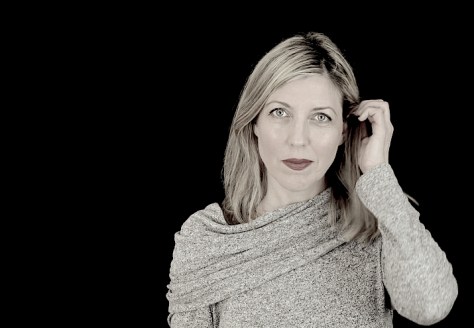
Ren Powell web 2018 copy (1)Ren Powell was born in California but has settled in Norway. She has six full-length collections of poetry, and more than two dozen books of translations. Her sixth collection The Elephants Have Been Singing All Along was published in 2017. Her poems have been translated and published in six languages.
Ren and Bekah connected via The 2018 Poet Bloggers Revival Tour. We wanted to know more about her and her writing, so here is our interview with her.

Q~ Tell us about “Spinster’s Shroud.” How is it representative of your work?

A~Yeah, so here is a strange woman doing strange things. But more than that, I can see my tendency to focus on whatever little facts fascinate me. This poem was inspired by an article I read about a Swedish midsummer ritual where unmarried women put bugleweed under their pillows, so they will dream of the man they’re going to marry. If I were to write this poem today, I would work harder to add all that information to the poem, rather than play hit and miss that anyone gets the allusion. But that’s a good thing, I think: to know how I want to improve as a writer.

I like numbers. I like precision – it grounds things for me. I also like irony and shadow narratives. In this case: the shroud being a wedding dress, “tie the knot” her marriage with a man at this late stage of her life – or with death itself. There the sexual imagery of the needle and cushion, and the freedom of abandonment – either sexual or spiritual.

Q~Did the poem come easily to you or was it hard to write?

A~This one flowed. But having said that, it flowed in a series of edits over a couple of months. It began as a four-line poem and grew. Most of the time my editing process is about adding and filling out, not cutting. But the song – the melody – was there from the beginning.

Q~What’s your writing process usually like?

A~Slow. I try to listen to the dragons. Catch the melody first and then let it grow. I sit down at the desk. Light a candle. Set the chimes to mark a beginning and end, and I listen. I write a lot of crap. I repeat myself a lot. I obsess about how everything in the world is round. I forgive myself for all the crap. I start again.

Q~How would you describe your style?

A~In grad school, my mentor once called me a post-modern modernist. I’m not exactly sure that that means, but I do think that I have been more influenced by the Imagists than I would like at this point. I think that sometimes I make the reader work too hard. I grew up thinking that great poetry was academic and necessarily intertextual. I was later hugely influenced by Robert Bly’s book Leaping Poetry, and maybe that combination made some of my writing too inaccessible, for even my own taste these days. It is a fine line to walk, isn’t it: accessible poetry vs. pedestrian verse?

I think my “style” is continually evolving, and I am proud of that. I am often influenced by the music of writers I have translated. I like experimentation: free verse, nonce verse, respectful rip-offs of forms that aren’t directly translatable from other languages. I have a penchant for scientific facts used as metaphors for our internal/emotional lives. I would say that I tend to stick more to themes than styles. I am fascinated by the unreliability of memory, and as another poet once said of my work, I write “poems about strange women doing strange things.”

In contrast with a lot of contemporary poetry, my writing is still primarily for the page (which is odd, since I work in the theater). I like to play with line breaks, indentations and white space. Often, I invite the reader to read both left to right, and down columns, or grouped with indentations to indicate correlations.

Q~Why do you write poetry?

A~Honestly, because I don’t sing very well. When I write poetry, and it flows, I feel a kind of catharsis similar to singing drunk in the bathtub: it’s an emotional and physical release. It’s like orgasm. It’s like running. I wonder if any scientist will ever hook up with a poet and measure their serotonin and oxytocin and all that, just as she finishes the line that pulls it all together. I would volunteer.

Q~On Twitter, you mention that your two passions are writing and running. Do you see a connection between the two?

A~I think running clears the space for me to write. I run in the mornings and then come home and write for fifteen minutes to an hour and a half, depending on the workday. Running is about breathing and taking in the smells and sounds of the world. It’s about listening. I had a project a few years ago called Running Metaphors that I’m excited to be starting up again from my blog and on Instagram.

Q~You said you have an “ambivalence and confusion regarding social media and what being part of a poetry ‘community’ means.” Can you explain what you mean?

A~Norway doesn’t have a tradition of academic writing programs in the Universities. My whole goal of getting a PhD and becoming “a poet” (i.e. teaching poetry at a university) and finding a tribe (as they say) went *poof* when I decided to stay here in Norway. I live here, and I write in English. That makes me an outsider. I am lucky to have an amazing translator, but I’ll always be considered an American poet by my colleagues here.

And yet, having been here so long, I no longer write to the American experience, and especially these days, that makes me an outsider in virtual poetry communities.

I don’t go to conferences or residencies. I see Instagram posts with hashtags like #poetshavingfun and get as jealous as a teenager. I guess I still crave the validation and community I’d planned for and imagined.

But then, I get eyes off the computer and go for a run, handwrite a poem in my journal and remember it was all a consumer package that I wanted. This is what I’ve got, and I make it work.

Q~What is the poet’s role in society?

A~I honestly believe that a poet’s job is to be the antidote to the incorrect belief that we are unique as individuals, as a particular generation, or as specific cultures. I believe that art in general is about communicating the human experience: to alleviate both isolation and narcissism.

Q~What’s one piece of advice you want to share?

A~Will I sound like a jerk if I say don’t fetishize “being a poet”? I’ve slipped into that a few times. It made rejection much more painful than it needed to be. The fact that I don’t really belong to poetry community question whether or not I’m really “a poet”. I think it’s especially difficult these days with social media, and with the neo-liberal demand for us all to brand and sell ourselves. I’m not good at that part, not good at networking, and if I focus too much on those aspects of poetry, I stop writing. It’s ridiculous, I know, but I doubt I am the only person who has struggled with this desire for approval, and this need to find a persona of sorts to market. You know that song from Gypsy? “You Gotta Get a Gimmick”. When I start getting stressed about publishing and selling books, I hum that song and remind myself not to take any of it too seriously.

Just write.

I am also really terrible at tackling criticism. I read a critique and start cursing and telling my partner what an idiot the person is… then I put everything in a drawer and forget about it for a week. Then I read it again and can actually take it in and learn from it. And even be grateful for it.

Q~Do you find yourself returning to certain themes or subjects in your work?

A~I think I write about outsiders and secrets.

They say that we can work through our personal traumas by working with narratives – changing them, creating perspectives. I think I do that. I am also drawn to other people’s deep experiences, I am curious about them. About the humanness of it all – the good, the bad. The way we hand over our narratives, intentionally or not. I think we all have secrets from ourselves, too. What is stashed in our mitochondria? I am fascinated by the secrets of the non-human world: how we have only recently learned that elephants talk to each other all the time, and we just can’t hear it because it’s subsonic: a secret language – the entire human species as outsider.

Q~What are your poetry highs/lows of the last year?

A~Oh, this year has been extremely difficult for me. Last July, a congenital defect in my pelvis revealed itself (after all these years) by causing life-threatening blood clots. I was rushed to the hospital with blue lights and siren blaring, and I’ve had a difficult time processing it all. I pulled away from poetry (as a genre) and wrote a couple of plays instead. I have only started writing poetry again this summer.

Q~What are your poetry likes/dislikes?

A~I think I have eclectic tastes. I don’t like poetry that sounds like platitudes. Or poetry that uses only abstract worlds like love and spirit. I’m drawn to poetry that shows me what I believe is concrete in the world and then dissolves it for me. I’m amazed by poetry that can make me connect a whisker on the muzzle of horse to the memory of a (and my own) first kiss.

Q~Who was your poetry first love?

A~Cliché as it sounds, the St. James version of the Bible. Prayers. Then Dr. Seuss. Seriously? Elisabeth Bishop’s “In the Waiting Room.”

Q~Who are you reading now?

A~Actually, I have just picked up Edna St. Vincent Millay again. “Renascence” fascinated me when I was 14.  Reading that poem now, I understand it differently, while carrying with me that 14-year-old’s intuitive response. Being 52, I am excited to read much more of her work in the context of her life – and the context of mine.

Q~There are lots of publications out there. What is a literary gem you feel deserves more attention? Why will we love them?

A~I would say Poetry Internal Web is a great resource for finding new voices. I know that a lot is lost in translation, but a lot is still there – sometimes the translation process opens a poem even wider. I hope it’s okay if I mention Poemeleon? It’s Cati Porter’s baby, and I have been so proud to be associated with it. There will be a new call for poems very soon!

Q~Where can readers go if they are interested in reading more of your work?

A~Most of my books have been published in hardback in Norway. Several are still available from my publisher – or people can email me to help arrange shipping. My selected poems Mercy Island is available in North America from Phoenicia Publishing. I haven’t been good about submitting work these last two years, but I have several poems I am proud of in the online journal Escape into LifeI also have some translations here: https://www.poetryinternationalweb.net/pi/site/poem/item/26851 I am currently overhauling my website. I am on Instagram and Facebook. I also had a project called This Choice Podcast. It was a way for me to reach out and talk to poets in the states.   I miss it very much.

Hunger / an interview with #poetblogrevival cofounder Kelli Russell Agodon

Hunger

by Kelli Russell Agodon

If we never have enough love, we have more than most.
We have lost dogs in our neighborhood and wild coyotes,
and sometimes we can’t tell them apart. Sometimes
we don’t want to. Once I brought home a coyote and told
my lover we had a new pet. Until it ate our chickens.
Until it ate our chickens, our ducks, and our cat. Sometimes
we make mistakes and call them coincidences. We hold open
the door then wonder how the stranger ended up in our home.
There is a woman on our block who thinks she is feeding bunnies,
but they are large rats without tails. Remember the farmer’s wife?
Remember the carving knife? We are all trying to change
what we fear into something beautiful. But even rats need to eat.
Even rats and coyotes and the bones on the trail could be the bones
on our plates. I ordered Cornish hen. I ordered duck. Sometimes
love hurts. Sometimes the lost dog doesn’t want to be found.

Previously published on the Academy of American Poets website:
Poets.org Poem-a-Day 2017.

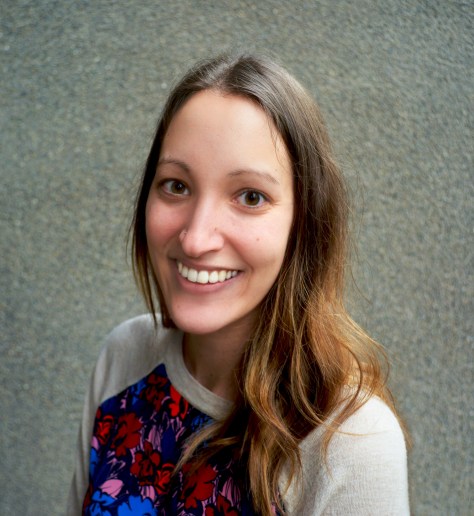
Kelli Agodon full photoKelli Russell Agodon’s most recent book, Hourglass Museum was a Finalist for the Washington State Book Awards. Her other books include The Daily Poet: Day-By-Day Prompts For Your Writing Practice and Letters from the Emily Dickinson Room, Winner of the Foreword Book of the Year Prize for poetry. Kelli is the cofounder of Two Sylvias Press.
Kelli describes her writing this way: “If someone walked into a fancy party in flip-flops, hugged a few guests, drank some champagne, opened the windows so wild birds could fly in and perch on the chandelier then took every one on a field trip to the cemetery, that would be my style.”

Kelli and Bekah connected via The 2018 Poet Bloggers Revival Tour, which Kelli started with Donna Vorreyer. We wanted to know more about her, her writing and the origins of #poetblogrevival, so here is our interview with her.

Q~Tell us a little about “Hunger.” How is it representative of your work?

A~I think this is one of the poems I am most known for, and I feel it’s a good representation of my work because it’s both dark and funny (well, I think it’s funny). Usually when I read it to an audience, they laugh when the narrator brings home the coyote and tells her lover she has a new pet, and then I hear gasps when we come to the part about that cat. As someone who grew up being told weird stories of deaths in my family, I was brought up with the idea that’s what life is—we’re all having a good time then someone dies. But, there is also love and humor. There are also people trying to be helpful and also making mistakes. Maybe my entire philosophy for life is in this poem—we want to be loved, we screw up, bad things sometimes happen, we do our best to go on, and we hope to have dinner together in the end.

Q~Why poetry?

A~Why love, why sex, why desire, why nature, why curiosity, why find art when the world is falling apart?

Our reality is where we look, so why not look to words, why not create? No one apologizes for watching sitcoms or organizing the shed, we shouldn’t even have to question poetry. Why poetry? Why not.

Q~What’s your writing process like?

A~Imagine the sky on a foggy day, then imagine the sun coming through the darkness, or the sun not coming through and an entire day of shade—that’s my writing process.

The majority of my poems are never submitted or published. I just enjoy writing and creating. When I wake up and the first thing I do is to write a poem, that is when I’m living my best life (as Oprah would say).

Q~What are your poetry likes and dislikes?

A~Likes: I love poets who write about relationships, desire, weird stuff, death, personal struggles, their own lives/issues, and who bring vulnerability to their work in whatever form or way they are dealing with it. I like inclusively, realizing we’re all at different parts of a journey and to respect and honor that. I like kind and helpful poets who help raise other poets up than to bring other poets down. I love poets who share poems, who interact with a large group of people and find ways to make the world a better place. I love to be surprised by poems and to see language used in interesting ways. I like visual poems and when poems appear in unexpected places. I like long walks on the beach with poetry and getting caught in the rain…

Dislikes: Ego. Author nametags. Poets who read over their time limit. Poets who only connect or support/like/retweet/respond to other poets because they feel they can help their career. I dislike exclusively in poetry and looking down at someone because they don’t have a degree or book, or looking up to someone because they do. I am not a fan of placing anyone on a pedestal and/or then knocking them off it. So, I guess I’m not a fan of pedestals. Though I do love trophies and honestly, most of the poets I’ve met have been sweet and kind, so my dislikes are probably limited to a small group (I hope they are limited to a small group…)

I think there is always more to love when it comes to poetry, both in our community and in learning about each other and ourselves through words and images. Honestly, I am just thankful every day that people keep falling in love with poetry and trying to write poems themselves. I always say the world would be a better place if everyone woke up and wrote a poem. Just imagine. I think it would be divine.

Q~Why did you and Donna decide to start the Poet Bloggers Revival Tour?

A~It was cold and dreary November . . . I believe it was Steven Schroeder and Charlie Jensen who first mentioned blogging on Twitter, and I got nostalgic. Blogging was my first poetry community with poets like C. Dale Young, Victoria Chang, January Gill O’Neil, Paul Guest, Aimee Nezhukumatathil, Eduardo Corral, Jeannine Hall Gailey, Mary Biddinger, Sandra Beasley, Oliver de la Paz, and so many others. I realized with Twitter and Facebook my community has grown large, but it’s different because so much of it is in short-form content (a tweet, a post, an update), but back then, we wrote these long paragraphs of our poetry lives, thoughts, fears, joys, to share with each other what was going on. It was sort of like sending poetry letters to each other.

You would read someone’s blog post and maybe continue the conversation on your blog. We’d link back and forth. It felt smaller and more intimate. I felt close to my blogger friends, even now when I share tweets or like Facebook posts, I tend to gravitate to my old blogger buddies because they feel like poets I know so much more.

I think we wanted to try to recreate that intimacy and connection by blogging once a week this year.

Q~Has it accomplished what you hoped? 

A~Yes and no.

Yes, in that I feel reconnected with a lot of poets (and have “met” a lot of new poets) plus I am getting a new glimpse into their lives again.

No, in that I was planning on blogging once-a-week, and I haven’t kept that up just due to a very busy personal life this year. I’ve deactivated Facebook on and off all year and only use Twitter (and occasionally photos on Instagram), but my personal life has had me scrambling, so I realize how I once woke up and wrote a blog post, now I wake up and manage emails or am running out the door to work.

Bu,t the people who are blogging, are accomplishing what I hope—a deeper glimpse back into the lives of poets.

Q~Have there been any unexpected outcomes?

A~Guilt on my part for not keeping up. 😉

Q~In April, you mentioned that blogging was frustrating you a bit because of worrying that what you wrote wouldn’t be “good enough.” It reminded me of the article you wrote, “Submit Like A Man: How Women Writers Can Become More Successful.”  Why do you think so many women struggle with this feeling of not being “good enough” and being afraid to put ourselves out there?

A~I can’t speak for all women, but as someone who grew up in the 70s & 80s, I know some of us saw our job as a girl was making people feel comfortable. If something happened or if someone was mad at us, the first question was “What did you do?” We worried about upsetting people. Sometimes we carried shame even for things that weren’t our fault.

I think there are many generations of women who grew up this way, always believing that they were the ones who did something wrong or that they could have been “better.” It was easy to internalize this voice and believe it. For a long time, I did. Even sharing this right now is uncomfortable because as I’m typing this I’m thinking, Am I explaining this well? Am I answering this correctly? Am I saying too much, not enough? There’s a perfectionism that can steer our lives, a worry, an anxiety.

It’s tough to put yourself out there, to be vulnerable. The world, the internet can be a challenging place if you are a sensitive person, it can feel like too much. This is when it may feel easier not to risk—you can avoid judgment by not sharing, writing, participating, etc. etc. But I don’t think that’s the best way around the feelings…

As a young woman, I remember never feeling good enough. As an adult woman, I still find myself feeling that way sometimes, but I’ve become easier on myself. I allow myself to try my best, knowing that my best won’t please some, and that’s okay. The goal is to finish; it doesn’t always have to be pretty, it just needs to be done.

The other quote I tell myself is “You only fail if you don’t try.” This takes away the outcome portion of whatever I’m afraid of doing, and it allows me to feel good about what I can control—the action. We cannot control the outcome of anything we strive for when other people are involved. I can send my best poems to a journal, but I cannot control if the editor will 1) Like them  2) Publish them.  So, I’ve learned to stop worrying about it and focus on what I can control.

I also keep myself surrounded by people who support me. I cut ties with those who don’t. I’ve become much more aware when I’m feeling not “good enough,” and remind myself that the people I love and admire are not perfect. We are human, we will screw up—we just need to be easier on each other and ourselves.

Q~Any other advice do you want to share?

A~Trust your intuition. Put your own work before chores and email. Remember, in the big picture, none of this really matters. Have fun. Make love. Work hard. Choose joy. Prioritize your writing.

Q~How do you balance your time between your own writing and the work you do as an editor?

A~To be truthful, I don’t try to find balance or even believe that’s something we should strive for in life (especially women). Balance is one of those words that can make you feel not good enough. But maybe if we look at a life from beginning to end, we’d see balance, like Chaos theory, how small bits don’t make any sense on their own (and in fact seem well, chaotic, but if you look down from above you see a pattern. Maybe this is also our lives. But, I don’t strive for balance in daily life; I strive for being kind, helpful, and finishing tasks.

There are times of overload in one part of my life, then I meet with a friend to write poems, then I’m overwhelmed at work and only editing others’ work, then I have downtime, then I’m writing poems again, then there’s some sort of family issue, then I need to buy a new rug because my cats have completely clawed the heck out of mine, then I take a nap or stay up late, wash, rinse, repeat.

So, I guess my answer is that I don’t balance myself. I make time for what’s important which is my writing, my editorial work, and my family/friends—though not necessarily in that order. But I’m highly aware of my priorities, and I say yes to them and no to the things that do not add or fulfill me in life.

I do know if I start to feel resentment towards something—then I have had too much of I,t and I readjust. Maybe that is the “balance” you ask about, but it’s not really balancing, just readjusting my time so I don’t feel bitter. Maybe what people call balance is just creating a life where you don’t feel bitter or resentful, whatever that means to you.

But, I do make time for my own writing along with the tasks I have as an editor. Sometimes I like to be overwhelmed with my own work; it can really create some interesting poems!

Q~Where can readers go if they are interested in reading more of your work?

A~Check out Hunter’s Moon and How Damage Can Lead To Poetry on WaxwingShadowboxing Andy Warhol on VerseDailyBraided Between the Broken in New England Review, and How Killer Blue Irises Spread in The Atlantic. You can also visit my homepage and connect with me on Facebook,  Twitter,  and Instagram.

Learning to Drive In Pulaski, Wisconsin / an interview with poet Crystal Ignatowski

Learning To Drive In Pulaski, Wisconsin

by Crystal Ignatowski

It was August. Heat rose off the cement in
deep breaths, thick and heavy waves.
We had the windows cranked

down and I could see the skinny
road behind us in the side view mirror.
I couldn’t seem to keep the car straight

and you kept cracking jokes,
saying we sure were lucky Pulaski
only had a population of 45. I gritted

my teeth, ready to make you proud.
Your arm hung out the window,
but all of me was inside: sweating,

trying not to blink, holding my breath
inside my 16-year-old rib cage. I didn’t
know you well. But then,

when we rolled to the only stop sign in town,
I experienced your patience: long, unrestless,
true, and I saw something crack open inside you

like an egg, and all the yellow poured out.
You pulled your arm inside and let the window
frame the landscape: all the wheat, all

the overgrown pasture trying to be
a painting, all the cows with their beady
eyes. You had lived here all your life, fallen

in love, said goodbyes, shot your first deer,
grown your first garden, watched her die,

and for me this was just a stopping-
through, a half-home, a place
to learn to drive.

crystal headshot

Crystal Ignatowski’s poetry has been featured or is forthcoming in Contemporary Haibun Online, One Sentence Poems, Tuck Magazine, Right Hand Pointing, and more. She lives and writes in Oregon.

Crystal describes her style as “free verse, narrative, autobiographical.” She says, “I mostly write about normal, everyday things in my life: my family, driving through town, going to the beach, watching a TV show, etc. I try to write what I know and create a story from it. I draw inspiration from poets like Sharon Olds, Dorianne Laux, and Ada Limon. Sometimes I challenge myself by writing a poem in traditional verse (this year I had a poem published in Contemporary Haibun Online, which was exciting) or about an abstract idea, but it isn’t usually what I usually gravitate to. I gravitate towards what I know, what I lived that day.”

Crystal and Bekah connected via The 2018 Poet Bloggers Revival Tour. We wanted to know more about her and her writing, so here is our interview with her.

Q~Tell us a little about the poem, “Learning To Drive In Pulaski, Wisconsin.” How is it representative of your work? What’s the backstory?

A~If you opened my poetry journal, this is the type of poem you would regularly see: it is drawn from an experience in my life, a very simple experience (learning how to drive), but the poem itself goes deep. This poem is exactly as the title sounds: learning to drive in Pulaski, Wisconsin. My dad’s side of my family lives there, and this poem is about my uncle. We live on the opposite ends of the country, so I don’t feel like I know him as well as I know my family who lives close to me. But, there are times when I visit when I see into him, into a little opening or a crevice, and he makes sense to me, and I feel like I know him better than anyone I’ve ever known. Leaving Wisconsin always makes me sad and that is what this poem is ultimately about.

Q~Did it come easily to you or was it hard to write?

A~This poem came very easy for me to write. I workshopped it in my writing group, as well as with another wonderful poet, and the critiques also came easy. When people critique a poem that has come naturally for me, I feel less defensive about it. I feel like the poem just came to me, and therefore, I have to honor what came.

Q~How has workshopping helped your writing? What advice can you share?

A~Two pieces of advice that I have been reminded of lately: “Write for yourself, and you will reach the most people,” and “It really isn’t about the publications.”

I recently tried writing a poem about race. I workshopped it with two women of color and it was a very intense, powerful, yet intimate conversation. One of the women reminded me that I should stick with what I know and write for myself. She could tell I was struggling with this poem, and we talked about how sometimes it is okay to not write about the things that seem big and worldly right now. I have a desire to write about politics, race, gun violence, all these things, but deep down, I just want to write about my everyday life. I just want to write about driving in Pulaski with my uncle. She reminded me to stick with what I want to write because those things are going to resonate with the most people. Write smaller, reach wider.

This year I made a goal to get 100 rejection letters. What I learned is that submitting your work is a full time job! Just the habit of researching publications, workshopping poems, and sending them out into the world has been a wonderful experience. I have gained confidence in myself and my writing. And, with so many rejections, they don’t hurt or sting as bad! But, what I learned most is that it isn’t about the publications. It isn’t about the rejections or the acceptances. It is about the writing. I recently have been giving out a lot of poems to family members for birthdays, Mother’s Day, etc, and seeing a family member cry from receiving a poem about them, wow, that is bigger than any publication.

Q~What’s your writing process usually like?

A~I don’t set a schedule for my writing. The only “set” part of my writing is that I write every Tuesday and Thursday at Dragonfly Coffee House in Portland before I intern at Tin House. Other days, I just let the writing come. This might get me in trouble some day, but my best writing comes while I am driving. I have a notebook in my car, and I literally write in the car as I’m driving. (So bad, I know!) The writing is all messy and goes all over the page, but sometimes I just have to get the sentences down! Before they leave me!

Q~Oh my. What has interning at Tin House taught you?

This could amount to a novel if I truly answered the question, but since I am a poet, I will try to keep my answer concise. Tin House has taught me how to engage with other like-minded people. Over the last 5 years I have kind of been hermitting with my writing, with my passion of books and literature, and with my excitement to get back into the publishing industry. Interning at Tin House has provided me a platform to break out of my shell. I am eternally grateful for all the feedback I have received, the skills I have learned, and the support I have been given from every person at Tin House. They are the dream team.

Q~You also joined the Poet Bloggers Revival this year, which Dave Bonta digests weekly on Via Negativa. How has this impacted you?

A~I’ve been blogging since 2011. I mostly just blog poems I have been working on and don’t intend to send out to publications. Joining the Poet Bloggers Revival has allowed me to see how diverse poets are (and think) when given something to work toward. I have continued to simply post my “work in progress” poems. Each week, though, I see poets who are doing new things: perhaps it is an interview or maybe it is a deep rumination about their craft or something they have been needing to get off their chest, or maybe they comment on a worldly issue that has recently happened. I’m really impressed to see so many different takes on the week from every individual.

Q~Why are you drawn to poetry?

A~Poetry is razor sharp; it has the power to engage, inspire, and change someone’s perspective in just a few moments. There are few things in this world that can do that today.

Q~Who was your poetry first love?

A~Hands down, Sharon Olds. I will forever be a fan. I also have a big soft spot in my heart for Andrea Gibson because they taught me it is okay to push the envelope with my writing. They also taught me repetition can be the ending to a poem…even if your partner doesn’t think so! I think I’ve seen Andrea live six times, and I love them more and more each time.

Q~Who are you reading now?

A~Books beside my bed right now include: Matthew Dickman’s Mayakovsky’s Revolver (re-reading this because it is so incredible), Ijeoma Oluo’s So You Want to Talk About Race, George Saunders’ Lincoln in the Bardo, and Oliva Gatwood’s New American Best Friend.

Q~Where can readers go if they are interested in reading more of your work?

A~I regularly post to my poetry blog on Tumblr. You can also find me on Twitter .

Bimbo, a Deer Story / an interview with poet Risa Denenberg

Bimbo, a Deer Story

by Risa Denenberg

For she had no body odor and lay motionless
beside the dead doe, and so
you took her home and fed her goat’s milk.

This you did: collared and tethered her, named her
Bimbo, a pet wandering a yard strewn with cars
on blocks and old oil tanks.

Your darling: adopted, broken, stroked, chosen.
And who am I, trussed and bound to a fault line,
who shadowed not her own mother, nor knows
how she is meant to be.

originally published in Menacing Hedge 2014.

risa (2)

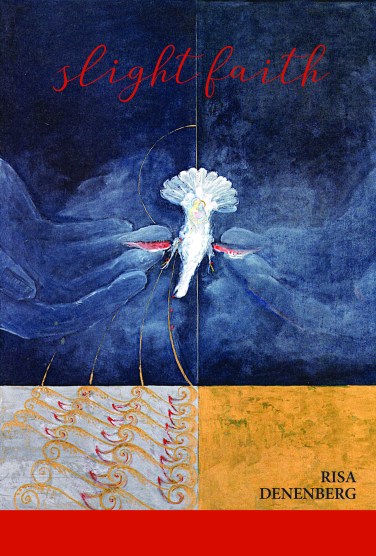
Risa Denenberg is a working nurse practitioner and poet with 6 published poetry collections. She is a co-founder and editor at Headmistress Press, a small independent publisher of poetry by lesbians. Her most recent collection is slight faith, just released from MoonPath Press.

Of her style, Risa says, “I write mostly free verse, a combination of lyrical and narrative, with attention to poetic devises such as assonance, alliteration, enjambment, repetition, lists, and anaphora. I have tried my hand at some forms such as sonnets, haiku, and villanelles. I often write poems using equal lined stanzas that hold a shape, but also abstractly-shaped poems with very different line lengths. I also write prose poems. I try to query the poem to see what shape it wants to be.”

Risa and Bekah connected via The 2018 Poet Bloggers Revival Tour. We wanted to know more about her and her writing, so here is our interview with her.

Q~Tell us a little about the poem, “Bimbo, a Deer Story.” Is there a back story you want to share?

A~It was originally published in Menacing Hedge and is included in slight faith.  It came to me after reading a news item that described an eccentric woman who had found a fawn beside her dead mother and took her into her home, treating her like a child. The details (feeding her goat’s milk, naming her Bimbo, etc.) are directly from the news story. It made me realize that any sentient creature, taken out of her natural environment, would probably never become who she was meant to be. I identified with that concept, not because I was adopted, but because I often wonder who I was meant to be. The poem hints at a troubled relationship between the narrator and her mother, but prefers to leave much to the reader’s imagination. I think the poem is similar to others of my poems in that it has a certain restraint, rather than being “in your face,” it shows (rather than describing) emotions, and hints of darkness without specificity.

Q~How is the poem representative of your new collection?

A~slight faith is a collection of poems that consider ways of creating and finding meaning, ways of seeing the world in all its horror and still wanting to live. The story that my poem, “Bimbo: a Deer Story,” is based on looks to the natural world (a dead doe, the fawn helpless at her corpse) and positions the fawn in an unnatural environment (a woman’s home). The story is simultaneously heartwarming and anomalous. In the poem, the narrator tries to understand who she is under the circumstances she has been dealt. She looks for meaning, which I believe has its core in faith. Many of us who are not drenched in religious life have difficulty talking about concepts like faith, and yet these tropes are found everywhere in art. I’ve learned “god language” through my work in end-of-life care, as a way of connecting with people who speak it. My own experience of faith vacillates between feeling authentic (faithful) and feeling hopeless (faithless). At core, faith says there is meaning. I lose and recover meaning all the time. slight faith is a way of finding peace in that dilemma.

Q~You mentioned your work in end-of-life care, how much does your “day job” influence your writing?

A~There is no doubt that my years as a nurse, witnessing illness, suffering and death, has been a bedrock of my need to write. It has also given me experiences to write about, as I have done in my chapbooks What We Owe Each Other and In My Exam Room (both published by The Lives You Touch Publications). When life seems suffused with sadness, despair and even alienation, poetry carves out a place for these difficult emotions in the world.

Q~How do you balance your work at Headmistress Press with focusing on your own writing?

A~It can be difficult. I not only spend many hours a week running Headmistress Press with Mary Meriam, I also work full time and volunteer with End of Life Washington, the advocacy group for Washington State’s Death With Dignity Law. Being an introvert and living alone helps me to carve out time for writing. I try to write first thing in the morning before other things clamor for my attention. I also go on retreats two or three times a year where I focus exclusively on a writing project.

Q~What’s your writing process usually like?

A~I write in spurts, sometimes daily, but sometimes not at all for weeks. I typically start with jumbled thoughts/emotions, unformatted, like journaling. I usually let it sit, but if there is a spark of truth there, later I might interrogate the writing by asking: what is it I am trying to say here? My goal in shaping and revising a poem is to strip away any words or codicils that feel false or so private that they are unlikely to speak in any viable way to a reader, and then to locate specificity of language by inviting the lines and stanzas to dialog. I read the work out loud to see if it has rhythm or musicality. Typically, writing poems is my attempt at meaningful conversations with myself, that I deeply hope will communicate meaningfully to someone out there.

Q~What’s one piece of advice you want to share?

 A~Just write the poems. Let the rest take care of itself. Support other poets; buy their books; attend readings and poetry events. Read as much poetry as you can, and learn how to read your own poems aloud.

Q~When you say, “learn how to read your own poems aloud,” do you mean as part of the writing process or were you talking about poetry readings?

 A~Poetry is about the sounds of words. When I’m reading others’ poems, if a poem excites me, I will often stand up and read it aloud. When I’m writing, I stop and read a stanza or a line aloud many times as I am revising and working on the poem. I don’t enjoy it until it “sounds” right. What I was referring to as advice, however, is that any poet who has the opportunity to read their work for others should, first of all, do it (!), and second, rehearse reading the poems aloud many times. A reading opportunity usually comes with some sort of time limitation, so it’s also very important to time the reading. Misusing the gift of time is very poor manners. Finally, with practice and deep familiarity with the words, I think most poets could give a convincing, strong reading. Personally, although I’m an introvert, I totally love reading my work for an audience.

Q~Who was your poetry first love?

A~When I was nine, I had pneumonia and had to stay home alone for several weeks, since my parents both worked. I had Robert Louis Stevenson’s A Child’s Garden of Verse with me in bed, and it was a wonderful comfort to read poems about children that felt like they could have been about me (when I was sick and lay abed, I had two pillows at my head). I also have to credit reading the Hebrew Psalms and connecting with their deep sorrow, lamentation, and longing. In high school, I fell in love with Emily Dickinson, started reading the beat poets, and was introduced to Sylvia Plath and the confessional poets. I greatly expanded my reading list after high school, but these introductory poets were very formative in my love of poetry.

Q~Who are you reading now?

A~I have been gob smacked by so many contemporary poets, and in particular, LGBTQ poets. I have bought so many books of poetry in the past year that I fear I’ll never find time to read them all. Lesbian feminists held sway with me in previous decades (Rich, Lorde, Jordan, Cheryl Clarke, Marilyn Hacker, Pat Parker, so many others), but lately the gay boys have really knocked me off my feet. I only have room here to name a few: Mark Doty; Danez Smith, Philip B Williams, Jericho Brown, Richard Silken, Saeed Jones, Carl Philips, Spencer Reece; Ocean Vuong. I must say that I also adore Natalie Diaz, Sharon Olds, Ilya Kaminsky, and Greg Pardlo.

Q~Where can readers go if they are interested in reading more of your work?

A~My books are available on Amazon or at my website. I also have a blog, and you connect with me on Facebook, Twitter and Instagram.

slightfiath-frontcov-withbleed

Sin É / An interview with poet Jayne Stanton

Sin É

by Jayne Stanton

We steam on barstools
read between slogans on a plastered ceiling
tune to the cuts and grace notes in banter
binge on ambience, high on E minor.

Coburg Street, past midnight, soaks
in sodium light.  Rain beats time
on bodhran umbrellas, my spine
a river of running quavers that stick
to the soles of my sensible shoes
so I high-step the home stretch.

Framed in doorways on Wellington Road
crinoline ghosts wear mirrored skirts
that flirt with moonlight.
Guest house stairs are in rising fifths.
My top floor room’s a tall ship, exploring
the lilt in the Lee’s liquid fingers.

First appeared in Southword 2013. (Highly Commended in the 2013 Gregory O’Donoghue International Poetry Competition.)

Jayne Stanton

Jayne Stanton lives in Leicestershire, UK.  Her poems have appeared in various print and online magazines and anthologies including Best British & Irish Poets 2017 (Eyewear Publishing).  She has written commissions for a county museum, University of Leicester’s Centre for New Writing and a city residency.  A pamphlet, Beyond the Tune, is published by Soundswrite Press (2014).

“Lyrical free verse best describes my style,” Jayne says. “ I’m also a musician, so I’m continually striving for musicality in my writing.  It’s what I instinctively tune into at poetry readings; my default, when reading silently, is to sub-vocalise.  I tend to favour brevity over narrative; my work often has a dark under-layer.”

Jayne and Bekah connected via The 2018 Poet Bloggers Revival Tour. We wanted to know more about her and her writing, so here is our interview with her.

Q~Tell us a little aboutSin É.”  Is there a back story you want to share?

A~The inspiration for the poem was a traditional music session in a bar in Cork, Ireland (I was on a poetry exchange as part of O’Bheal’s Twin Cities project, at the time).  As a fiddle player in a ceilidh band I’m more accustomed to performing than being on the receiving end, so the experience was a change to my usual perspective.

Q~Did it come easily to you or was it hard to write?

 A~The first draft of this poem was written around five months later.  I think the time lapse was beneficial in that it allowed the experience to percolate until the rain, the city streets, and my accommodation overlooking the river also took on a musicality of their own.  There were fewer re-drafts than usual so, although the poem didn’t write itself, it wasn’t an arduous process. The poem was Highly Commended in the Gregory O’Donoghue International Poetry Competition, 2013, and published online in Southword issue 23A.  The poem, together with the judge’s comment and my report on O’Bheal’s Twin Cities project can be found here.

Q~What’s one piece of advice you want to share on writing?

A~Writing is a solitary act, but it’s equally important to actively seek, and maintain, an outward focus in order to inspire and inform one’s writing.  Connect with other writers, both face-to-face and online (it’s never been easier); be an active participant in your local writing scene; attend writing workshops, poetry readings, literary events, festivals; support the work of others (it’s not a one-way street); live life (it’s the richest writing material I know).  And, read far more poetry than you can ever write.

Q~You mentioned on your blog having signed up for some writing workshops recently.  Why do you value this?

A~I look on writing workshops as part of my ongoing poetry education.  I value the learning to be gained from more experienced poets in order to explore, for example, the use of writing constraints, set forms and routes into writing that I tend to shy away from, ordinarily.  Writing outside of one’s comfort zone often produces surprising results.  For me, it’s the main benefit of joining a NaPoWriMo group, too; I’m prompted into writing what I’d never otherwise have written, in terms of subject, form, choice of language etc.  April becomes a break-out from my writing rut.

Q~Are you involved with your local poetry scene?  What’s it like?

A~There’s a lot happening on the poetry front in my local area.  Many local writing communities overlap and there are a growing number of regular open mic poetry and spoken word events, so there’s something for everyone, whatever their style or preference.  Leicester’s two universities also organise literary and independent small press events. I’m involved in running  a women’s poetry group, Soundswrite, which meets twice monthly to read and discuss published poetry by others and to workshop each others’ poem drafts.  I also attend the South Leicestershire Stanza, which is affiliated to The Poetry Society.  And I regularly read at poetry open mics across the UK Midlands as I think it’s healthy to step outside of one’s poetry locality.

Q~How does having a women’s only space like Soundswrite enable creativity for you and the group?

A~Soundswrite was set up in 2005, by Karin Coller and Pat Corina, as an open group for women in the UK East Midlands enthusiastic about all aspects of poetry.  In my experience there exists a difference in group dynamics between the women-only and mixed gender poetry groups I attend.  I think it’s fair to say that, while most of the active members of Soundswrite also attend other (mixed) groups, Soundswrite’s longevity is due, in part, to the need for a women-only space within the wider poetry community.  I continue to value our robust discuss of all forms of poetry, and insightful and impartial feedback on work-in-progress.  Soundswrite Press provides a showcase for our writing, having published, to date, several anthologies, and single-author pamphlets and short collections of poetry.

Q~Do you find yourself returning to themes or subjects in your work?  What are they and why do they resonate with you?

A~Many of my poems are slants on memories (or misrememberings), grains of truth or pure fiction.  In writing about the people who made me, I explore love in its various forms and guises, including the darker side; ageing and longevity are offshoots from the theme.  I’ve recently begun to explore superstition, old wives’ tales and folklore for a new writing project.

Q~Which poet first made you fall in love with poetry?

A~After years of studying the Classics and the English Romantic poets, it was Wilfred Owen’s WW1 poetry that leapt off the page and introduced me to a very different world: shocking images and vivid detail wrought from first-hand experience; poetry as protest and honest reportage.

Q~Who are you reading now?

A~I’ve been reading Ocean Vuong’s Night Sky with Exit Wounds; it was an honour to hear his T S Eliot prize reading in London in January.  Helen Dunmore’s final (and Costa prize-winning) collection, Inside the Wave also had a profound effect on me, especially its end-of-life poems.  Next on my TBR pile is Wislawa Szymborska’s Here, translated from the Polish by Clare Kavanagh and Stanislaw Baranczak.

Q~There are lots of publications out there.  What is a literary gem you feel deserves more attention?  Why will we love them?

A~I consider Magma Poetry to be one of the best windows on the breadth of contemporary poetry; it publishes work by new or little-known writers to the more established, accepting international submissions.  With reviews of current publications and thought-provoking articles, it is as informative as it is inspirational.  With three themed issues annually and a rolling editorship, Magma maintains a fresh approach to the publishing of poetry and comment.

Q~Where can readers go if they are interested in reading more of your work?

A~More of my work can be found in London Grip New Poetry, Ink, Sweat & TearsAntiphon, and The Lampeter ReviewYou can also check out my blog and follow me on Twitter.


Audi Alteram Partem (Hear the Other Side) / An Interview with poet Amanda Rachelle Warren

Audi Alteram Partem (Hear the Other Side)

by Amanda Rachelle Warren

I shut my eyes; a dead man sings in my head.

And I can pick the tune, well enough to
know it is a hymn for banjos and fiddles,
but he is a capella. I can pick the tune,
but not the words.

Drunk at sixteen, you sung church songs
to them few saints we believed in:
Our Lady of Lost my Last Dollar,
St. Speeditup,
Dear Done-it-now,
and all the Demi-Gods of Beech and Blossom.

Lying back in the mown grass, gathering dew,
you: mouth sticky, pink drink sweet and sweeter.
Revelation and damnation all soft-serve swirled like the Dairy King.
Every note dead set, but half the words cold, dead wrong.

I trace, on the map,
the path that led/took us to us.
Wet grass to pound cake.
Tender to foreign.
Touch to Touch-me-nots.

I ask the dead man to speak up.
What he’s singing seems important
only because I can’t make it out.

Sometimes there is a choir.
Sometimes the quick bright chatter of many voices.
Sometimes, with startling clarity, a woman, loud in my ear, distinct,
telling me about the nemesis sun, armed pirouetting galaxies,
and the smell of carded wool before it is spun.

And then asking me, over and over,
Don’t you understand? Don’t you? Don’t you?
I do not understand.

I ask the dead to speak up.
I tell them in my real loud voice,
Ifin ya’want something, ya haveta says so I can hear.

The dead man sings me to sleep,
and there’s nothing to fear.

First published by Causeway Lit 2017. (Winner of Causeway Lit Spring 2017 Poetry Contest.)

arw

Amanda Rachelle Warren’s work has appeared in Appalachian Heritage, The Pinch, Roar, South 85, Anderbo, and Beloit Poetry Journal as well as other journals. Her chapbook, Ritual no.3: For the Exorcism of Ghosts, was published by Stepping Stone Press in 2011. She is the 2017 recipient of the Nickens Poetry Fellowship from the South Carolina Academy of Authors and currently works as a freelance writer, part-time teacher, and full-time poetry pusher.

Amanda’s work was brought to our attention by poet Allyson Whipple, whom we interviewed here. We offered Allyson the opportunity to “pay it forward” by choosing another poet to interview, and she chose Amanda. Allyson says, “Amanda Rachelle Warren is one of the people I think exemplifies a true poetry citizen. No matter how busy she is with teaching or her own (fantastic) writing, she’ll always make time to support other poets. I have such deep admiration for not only her art, but for her service to other writers.”

So, here is Allyson’s interview with Amanda.

Q~How would you describe your style?

A~I would say that my style is very voice driven and concerned with place and inheritance and identity. I think the self is something we all struggle with, and I had a particularly difficult time finding my place in the world. I always feel like a bundle of contradictions, and my poetry reflects the voices of those competing selves. Place, self, and voice are interconnected for me. I am an Appalachian who grew up part-time in the city. I am an English professor and word-nerd with a non-standard dialect which I was shamed for early on in my education. That leaves a mark, particularly for poets. I had to relearn my own voice in some ways, and that’s made me concerned with dialect, speech patterns, the lexicon of our individual voices, and the ability/inability of language to capture the ineffable contradictions of our experiences. That sounded hoity-toity. I like words. Words haunt me.

Q~Tell me a little about the poem “Audi Alteram Partem.” How is it representative of your work?

A~I jokingly say that 90% of my poems are about dead boys. Although that’s not entirely true, this poem “Audi Alteram Partem” which is Latin for “Hear the Other Side” is definitely about a dead boy. I think I write poems about the things that haunt me, and one of the things that haunts me most deeply is the loss of those other potential selves and their experiences…ones I did not have because my path led elsewhere. For me, part of that loss of potential selves is a reflection of the death of loved ones who helped form the self that carries on without them.

Q~Is there a backstory to the poem that you want to share?

The Latin title is a thing I’m doing. I have a lot of interconnected poems about Appalachia with Latin titles. The choice is inspired by my great uncle who died extremely young during WWII in an airplane crash in Brazil. He was this hillbilly kid who loved machines, and oddly knew Latin, which surprised me. He ended up in the Air Force where he traveled around the world. I have a box of his letters home, and they’re fascinating. He would write his younger brother in Latin so the censors during the war didn’t know what he was sharing. He was clever and charming, and he inspired me to learn Latin, too. At the very least I wanted to understand what he had written. Sadly, his younger brother also died in an airplane crash. Gravity does not love my family.

Another inspiration for this poem is not something I normally talk about directly except to family really, but there are many women in my family who hear voices. It’s not a frightening or a troublesome thing, but a fact. Are they real? Who knows. Is it psychic ability or mental illness? Probably both. Centuries ago they’d be saints or witches, right? The fact remains that we hear voices, and those who do hear them love them. They’re a comfort of sorts. So, when I wrote this I was thinking about my extended family and the voices (literal and not quite literal) of those family members we lose during our lifetimes. Those people live on in the stories we tell and those things we’ve learned or come to understand by growing up in a space shaped by their presence: place and voice and sorrow and joy and love and struggle going back generations.

I was also thinking about the border between what is acceptable and unacceptable, what is holy and profane, which is a topic I’m always interested in. I’m not a religious person, or really a spiritual one in any standard sense of the word spiritual. But, I am fascinated by what does and does not feel like “church” for lack of a better word, and the ecstasy of that feeling–those moments of overwhelming oneness and belonging, those little moments of awe, in the strictest sense with a little touch of terror, that we hold on to that become touchstones or emblems of joy. I was also thinking of how religion often offers joy in one hand while slapping us with the other and telling us “no.” That’s not fair. Life does it, too. I want the awe. Many people seem to become less aware of awe as they get older and more concerned with what’s acceptable. Well, some of us do. I seem to get less concerned with what others think as I get older, or I just never grew up. I don’t want to be so “grown” that I can’t lay in the yard and stare at the sky and feel awe.

Q~Did it come easily to you or was it hard to write?

A~This one was easy but it also developed slowly. It started with a bunch of notes, the title, and the italicized line in dialect. It sort of pieced itself together and then went through a few drafts. I remember being excited to write it, particularly the part about the map and my indecision about whether the line should be “the path that led us to us” or “the path that took us to us.” Both the active “led” and the passive “took” seemed genuine to the poem, so I decided to include both. The list that follows moves the speaker and audience from innocence and acceptance to something less secure, more distant, impersonal, fragmented.  I want to weep for the two boys in the poem and what they hold on to…like the comfort of their voices and memories.

Q~What’s your writing process usually like?

A~Scraps and lists. Lists everywhere. Notes. A bit of a line. A snippet of an image. Something I overheard. Something I saw. A list of names for cats I hate. A list trying to describe a smell. A list of attempts at spelling out birdcalls. A list of the interesting names on gravestones in the old corner of the cemetery on top of the hill between this town and the next. A list of astronomical terms. A list of meteorological terms a storm-chaser might use. A list of places where someone might experience a first kiss. A list of street signs or town names that make me imagine the people who live there.

Eventually these things will spark a poem. I live up the road from a street called Withering Heights. Withering. On that road are three mobile homes. One day as I drove by I noticed that near the second trailer there was a dog standing on the roof of a red pickup truck and howling. That’s a beautiful image…old joyous dog sounding his heroic AOOUUU on top of a truck on Withering Heights!  That’s going in a poem eventually. And, that poem will go through a lot of weird little revisions and a few major ones. Hopefully, it will turn into something, but if not…that’s a learning experience for me. It might take decades to write that poem, or it might take a half day. I don’t know. I’ll keep working at it.

Q~Why do you write poetry?

A~I’m not really sure. I love words. I love language. I love the power it has to create ideas. I started out writing stories and reading nursery rhymes. I learned to read by writing actually. It was some 1970s method of teaching children to read and my Aunt wanted to try it out so I was her guinea pig. My first story was a poem/story about my new swing set. It was written in a “book” of kindergarten lined paper bound in wallpaper scraps. My mom still has it. I love writing prose, too, but poetry is my main focus. Ideas and images and lines and voices get stuck in my head, and it’s how they get out. It started out pretty cathartic, and I guess it still is, but it became more than that once I started reading the work of other poets. I was the 15 year old with three books of contemporary poetry in her bag, I guess.

When I started attending poetry workshops and learning more about what could be done with language I was hooked, but it still wasn’t a thing I thought about as more than a hobby…it was just a thing I did. I wrote poems. I got serious when I applied for my MA in creative writing at Ohio University, but I still didn’t know what I was doing or what I was getting into. I will admit that the reason I didn’t apply for an MFA is that I didn’t know that was an option. I had no clue about college and definitely no clue about graduate school. If I hadn’t gotten in I still would have written poetry, but I have no idea what I’d be doing with my life or where. Sometimes I like to think about that other self.

Q~Do you find yourself returning to certain themes or subjects in your work? Why do they resonate with you?

A~I return to place. I write about rivers and mountains and light and fractured people who are haunted by things. I write a lot about roads as well. I love roads. I love driving. I love seeing what’s out there. And, I’m super social, which is not very “poety” of me. I love talking to people and learning about their lives…what makes us human and tragic and bizarre and lovely. Also like I said, 90% of my poems are about dead boys. Again, I my poems return to those things that haunt me. I think that’s true of most writers though.

Q~Who was your poetry first love?

A~My first love was Homer. We had an old, dusty collection of bound books, which now live on my shelves. I read The Illiad and The Odyssey. It’s all action and adventure which I loved at age 10, but it was the quiet moments that got to me. The wine dark seas. The hair curling like hyacinths. The pleas with the gods. The descriptions. Then I found other poets. Yeats, Tennyson, Rilke, then e.e. cummings for some reason, and he exploded my expectations of poetry.  I’d borrow poetry anthologies from the library and I ate up all the modernists and the Romantics and sonnets and psalms. I devoured them. Still, I hadn’t heard a voice like mine though. I had that odd expectation that we sometimes get as novice poets that poetry is this grand formal thing that belongs to  only certain kinds of poets, and certain kinds of people. I felt like it didn’t really belong to people like me because I hadn’t read poets like me yet. It took me a while to find the voices and poets connected more intimately to my experience. So, when I found Lucille Clifton, C.D. Wright, and Maggie Anderson and I read their work, I felt like the world had exploded. It was awe.

Q~Who are you reading now?

A~Currently on my desk: Lucille Clifton’s good woman, Terrance Hayes’s How to be Drawn, Martin Rock’s Residuum, Eugene Savitzkaya’s Rules of Solitude, and Donika Kelley’s Bestiary.

Q~What are your poetry highs/lows of the last year?

A~I’ve had a lot of publications in the last year due to some major “carpet bombing” of literary journals. It’s been great actually. The high point is that I had a manuscript accepted for publication through Urban Farmhouse Press for their Crossroads Poetry Series.

Q~What’s one piece of advice you want to share?

A~Take risks with your work. I mean that in several ways. The first way I think we should take risks is when writing. We should be unafraid to go to uncomfortable or difficult places in our writing. We should be brave about complicated things, expose hard truths, risk discomfort, and be honest about what we want to share with others.  Remember, poets can always claim poetic license if someone should question us…so don’t hold back. Those poems we take risks with sometimes turn into our best pieces. The second risk we should be willing to take is in sending our work out for publication. I know many very good poets who are afraid to share their work or submit it for publication. I am not sure if it is a fear of exposure, rejection, or something else, but I always think “what’s the worst that could happen?” I mean, if you send your work out and it is rejected, that’s not a big deal. And, if it’s published? Well, that’s awesome! Rejection of a piece of writing isn’t a condemnation of the work or a writer’s ability. Keep writing. Keep sending. Keep sharing. It’s okay.

Q~Where can readers go if they are interested in reading more of your work)?

A~I have no idea. My work is scattered all over the place. I should probably have a website. Just Google me, but be sure to include the middle name or you’ll get the myriad other Amanda Warrens. I can also be found on Google Plus.

Q~Is there anything else you’d like me to know?

A~Not all of my poems are about dead boys.

blue_house_photAllyson Whipple is a poet, amateur naturalist, and perpetual student living in Austin, Texas. She is the author of two chapbooks, most recently, Come Into the World Like That (Five Oaks Press, 2016). Allyson teaches business and technical communication at Austin Community College, and enjoys hiking and camping.